Global buyers rarely need the cheapest Trap Filters. They need dependable separation under real operating conditions. A filter may look excellent on paper, yet clog quickly in a dusty factory. Another may survive pressure, but release particles into a sensitive process. These differences matter.
Dr. Richard W. Baker, a respected membrane-separation researcher, has emphasized, “Successful filtration begins with understanding the separation problem.” That principle applies directly to Trap Filters. Buyers should examine particle size, fluid viscosity, pressure range, temperature, chemical compatibility, and expected service life. They should also request test data, material certificates, dimensional drawings, and clear replacement procedures. Small details often decide whether a filter performs reliably.
The best choice is rarely universal. It depends on the process.
For global procurement teams, supplier evaluation should include production capacity, quality controls, packaging strength, export experience, and technical support across time zones. A filter shipped across oceans must arrive clean, sealed, and undamaged. Lead times also deserve attention, especially when one clogged unit can interrupt a production line.
Some rankings focus too heavily on filtration efficiency. That is incomplete. Pressure drop, maintenance access, and total ownership cost can matter more than a headline specification. We should admit that product comparisons are not always perfect. Testing conditions may differ, and supplier claims require careful verification. A practical shortlist should combine laboratory evidence, factory feedback, and controlled field trials. This guide examines the leading Trap Filters for global buyers, while questioning the assumptions behind every recommendation.
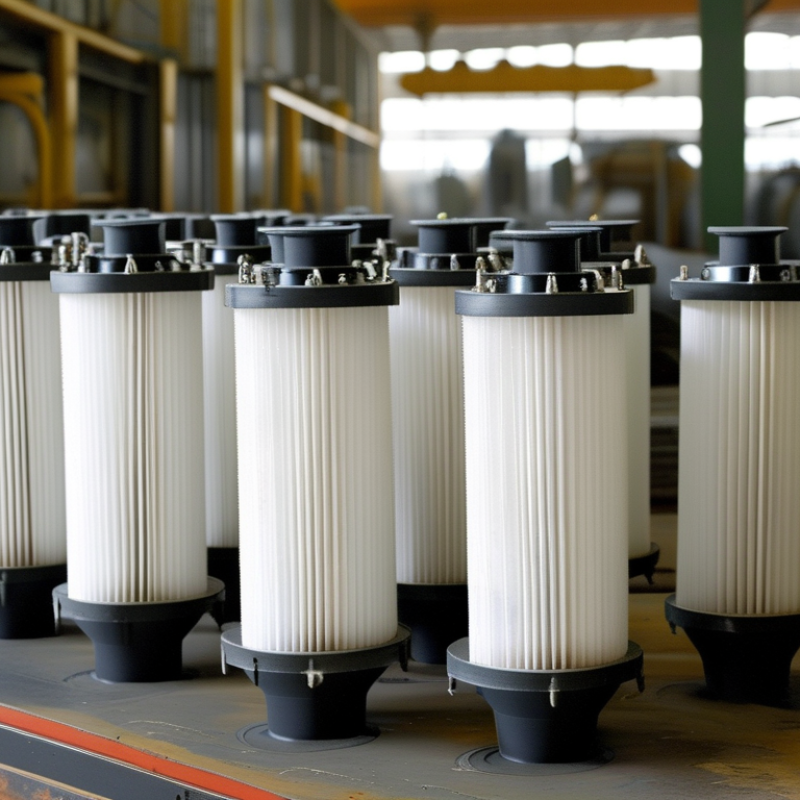
Trap filters are protective devices that catch unwanted particles before they damage pumps, valves, meters, or production lines. The term is not perfectly standardized. In practice, it can describe Y-strainers, basket strainers, duplex filters, magnetic traps, or coalescing units. Their basic action is simple: fluid enters a housing, passes through a screen or element, and leaves cleaner. Captured material stays inside a chamber for later removal.
Mesh size matters. A coarse screen may stop rust flakes, while a finer element captures smaller particles. Differential pressure rises as the filter loads. A visible pressure gauge can reveal this change before flow becomes unstable. The U.S. Department of Energy’s Improving Compressed Air System Performance report notes that compressed air can represent about 10% of industrial electricity use. A blocked trap filter can increase that burden through pressure loss. Small details become expensive.
Global buyers should compare filtration rating, flow capacity, pressure class, temperature range, drainage design, and replacement access. Duplex models allow one chamber to operate while the other is cleaned. Basket designs suit heavier debris and repeated maintenance. Coalescing filters handle liquid aerosols, but they need suitable drains and correct installation. ISO 16890 provides a recognized framework for testing air-filter efficiency, while the World Health Organization reported in 2022 that 99% of people lived where air-quality guideline levels were not met. That figure concerns ambient air, not every industrial system, but it shows why filtration claims need evidence. A supplier’s test method should match the buyer’s actual fluid, particle size, and operating conditions. “High efficiency” alone is incomplete.
Trap filters are narrowband band-stop filters that reject an unwanted frequency while allowing nearby signals to pass. The chart shows representative frequencies commonly targeted in broadcast, navigation, and wireless applications.
For procurement, buyers should confirm the exact center frequency, rejection bandwidth, insertion loss, impedance, power rating, connector type, and regional frequency requirements before selecting an LC, cavity, ceramic, SAW, or BAW trap filter.
Global buyers can choose from several trap filter types, depending on fluid, pressure, and installation space. Basket trap filters collect larger particles in pipelines and suit water, oils, and process liquids. Y-type filters are compact and practical for narrow pipe layouts. However, their smaller chambers may require more frequent cleaning.
Duplex trap filters allow one chamber to operate while the other is serviced. This design helps facilities avoid unnecessary shutdowns. Magnetic trap filters capture ferrous particles, which is useful in cooling circuits and metal-processing systems. For fine protection, cartridge-based trap filters offer controlled filtration, but replacement costs can become significant. In field inspections, poor sizing often causes more trouble than poor filter quality. That detail is easy to miss.
Tips: Confirm the required mesh or micron rating before ordering. Check pressure, temperature, connection standards, and available replacement parts. Stainless steel can support demanding environments, while coated or polymer housings may reduce weight and cost. Ask for test records, material certificates, and cleaning instructions. Local water quality matters too. A filter designed for clean water may clog quickly in dusty or mineral-rich conditions. Buyers should also consider drainage access and spare-element availability. Specifications sometimes look complete, yet service details remain unclear. That deserves a second look.
Global buyers should compare trap-filter specifications before comparing prices. Start with filtration rating, flow capacity, and pressure drop. ISO 16890 reports performance by ePM1, ePM2.5, and ePM10 classes, while ASHRAE 52.2 uses MERV values. These systems are not directly interchangeable. Request test results under the same standard.
Check the rated flow at the actual operating temperature. A filter rated at 100 liters per minute may perform differently at 150. Review initial and final pressure drop, because a dense filter can raise fan or pump energy. The UNEP Global Status Report for Buildings and Construction states that buildings consume about 30% of global final energy. Small pressure losses can become large operating costs across thousands of units. Also compare pore size, filter media, housing material, seal design, temperature limits, moisture resistance, and service life. A low micron rating is not automatically better.
Tips: Ask for independent test reports, batch traceability, and replacement intervals. Compare pressure-drop curves, not isolated numbers. Confirm whether ratings describe nominal or absolute retention. I have seen buyers overlook gasket compression; a perfect filter can fail around its edges. This detail deserves more attention. Use ISO, ASHRAE, or equivalent accredited testing, and document every assumption before approving a global specification.
Global buyers need practical trap filters before choosing a supplier. The lowest quotation can hide weak materials, unclear specifications, or unstable production. A credible supplier should provide a registered business address, complete product specifications, recent test reports, and clear production capacity. Documents matter, but they are only evidence.
Ask for samples made with the same materials and process as the intended order. Compare weight, dimensions, finish, packaging, and performance against written requirements. Use an independent laboratory when safety, durability, or regulatory compliance matters. Request batch records and inspection photos, but verify selected details through video calls or on-site checks. A polished audit can still miss rushed production.
Payment terms also reveal risk. Avoid suppliers who pressure buyers into unusual payments or resist reasonable quality clauses. Confirm lead times, replacement procedures, inspection rights, and shipping responsibilities in writing. Speak with recent business references if possible. In practice, no filter is perfect. I have seen small inconsistencies become expensive delays, while a careful supplier corrected them quickly. That difference often appears in communication: reliable teams answer specific questions, admit limitations, and explain corrective actions. A buyer should record every promise, because memory is not a quality-control system.
What Are the Top Trap Filters for Global Buyers?
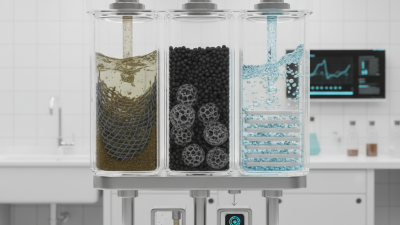
For global buyers, the strongest trap filter is not always the finest filter. Particulate filters catch rust and dust, while coalescing filters remove water and oil aerosols. Activated-carbon stages help control vapor and odor. Each type solves a different problem. A filter rated for 0.01 microns may look impressive, but it can create unnecessary pressure loss when upstream air is already clean.
Import checks deserve equal attention. Confirm the correct HS classification, country of origin, pressure rating, and material composition before shipment. For compressed-air systems, ISO 8573-1 helps buyers specify air purity classes. ISO 12500 provides relevant filter-performance testing methods. A housing used with pressurized air may also require country-specific conformity documentation. Requirements differ. A generic certificate may not satisfy every customs or safety authority.
Maintenance often decides the real purchase cost. The U.S. Department of Energy’s Improving Compressed Air System Performance guide states that leaks can waste 20–30% of compressor output. A blocked filter can increase this burden through pressure drop. Specify a visible differential-pressure indicator, a reliable automatic drain, and replaceable elements. Keep spare elements near the operating site, especially where shipping takes weeks. Record pressure readings monthly. That simple habit exposes trouble early. I would still challenge one common assumption: longer element life does not always mean better value. A cheaper filter with frequent replacement may outperform an expensive unit when labor, downtime, and import delays are included.
| Trap Filter Configuration | Typical Applications | Common Particle Retention Range | Typical Materials and Pressure Range | Import and Compliance Factors | Maintenance Requirements | Global Buying Considerations |
|---|---|---|---|---|---|---|
|
Y-Strainer Compact inline body with a removable perforated or mesh screen. |
Protecting pumps, valves, meters, nozzles, heat exchangers, and process piping from coarse debris. | Approximately 150–3,000 micrometres, depending on the screen opening and service. | Carbon steel, stainless steel, ductile iron, or bronze; common working-pressure ranges are approximately 10–40 bar, subject to design and temperature. | Confirm the applicable pressure-equipment rules in the destination market. Request pressure-rating documentation, material certificates, dimensional drawings, and a declaration of conformity where required. | Isolate and depressurize the line, remove the cover, clean or replace the screen, inspect the gasket, and check for differential-pressure increase. | Verify flow direction, connection standard, face-to-face dimensions, drain-port configuration, spare-screen availability, and local thread or flange compatibility. |
|
Basket Strainer Larger chamber designed for a removable cylindrical or basket-shaped element. |
High-flow liquid lines, cooling-water systems, fuel transfer, chemical processing, and industrial utility services. | Approximately 75–6,000 micrometres; perforated baskets are generally used for larger particles than fine woven mesh. | Stainless steel, carbon steel, cast iron, or lined materials; pressure ratings commonly range from about 6–40 bar. | Check lifting, drainage, pressure testing, and transport requirements for the complete vessel. Confirm whether the basket material and elastomers are suitable for the imported fluid. | Clean the basket when differential pressure rises or flow falls. Inspect the sealing surface, cover bolts, basket support, and basket deformation during each service interval. | Compare effective open area rather than only nominal pipe size. Ask for clean and dirty pressure-drop curves and the mass of the removable basket for handling planning. |
|
Duplex Basket Strainer Two parallel strainer chambers with a changeover mechanism for continuous operation. |
Critical liquid systems where the pipeline cannot be shut down for routine cleaning or element replacement. | Approximately 25–6,000 micrometres, depending on basket perforation and mesh selection. | Commonly stainless steel or coated carbon steel; typical working-pressure ranges are approximately 10–40 bar. | Confirm changeover-valve design, pressure-boundary testing, allowable leakage, actuator requirements, and documentation for the complete assembly rather than only the baskets. | Switch to the clean chamber, isolate the dirty chamber, release pressure, remove and clean the basket, inspect seals, and verify correct valve position before returning it to service. | Evaluate internal switching flow paths, chamber isolation reliability, spare-seal kits, access clearance, lifting points, and whether the operating team can service it safely. |
|
Temporary Cone or Plate Strainer Short-term debris catcher installed between flanges during commissioning or line cleaning. |
New-pipeline flushing, equipment commissioning, construction debris removal, and protection of pumps or instruments during startup. | Approximately 300–6,000 micrometres, selected according to expected construction debris and allowable pressure drop. | Stainless steel or carbon steel; pressure capability depends strongly on cone geometry, support design, and flange rating. | Match flange dimensions, bolt-hole pattern, gasket type, and pressure class. Request material traceability and dimensional inspection records for project documentation. | Inspect frequently during startup because debris loading can occur rapidly. Remove after the line is clean unless the design specifically permits permanent use. | Confirm installation direction, handle or extraction arrangement, available pipe gap, screen support, and whether the open area is sufficient for pump startup. |
|
Automatic Self-Cleaning Screen Filter Pressure-driven backflush system using a screen or wedge-wire element. |
Irrigation, cooling-water circuits, process water, filtration before membranes, and applications requiring reduced manual cleaning. | Commonly approximately 20–500 micrometres, depending on screen design and water quality. | Stainless steel, coated steel, or engineered polymer components; pressure ranges commonly fall between about 2–16 bar. | Review control-panel voltage, electrical enclosure rating, regional electrical requirements, water-discharge rules, and documentation for automated components. | Check flushing-cycle frequency, nozzle condition, differential-pressure sensors, control valves, drain lines, and screen integrity. Maintain a clean backflush supply. | Confirm minimum operating pressure, backflush water consumption, electrical frequency, language of controls, replacement sensor availability, and remote-monitoring compatibility. |
|
Magnetic Trap Filter Housing fitted with permanent magnetic rods or plates to capture ferrous particles. |
Coolants, lubricants, hydraulic fluids, powders, slurries, and process liquids containing ferrous wear debris. | Effective mainly for ferrous particles; capture performance depends on particle size, flow velocity, viscosity, and magnetic flux density. | Stainless steel housing with permanent magnetic assemblies; pressure and temperature limits vary widely by housing and magnet encapsulation. | Request magnet-material and temperature-limit information, food-contact documentation where applicable, hazardous-area documentation where applicable, and safe-handling instructions. | Remove and wipe magnetic rods or plates at a defined interval. Inspect encapsulation, seals, corrosion, and magnet retention before reassembly. | Ask for magnetic strength measured at the working surface, maximum operating temperature, demagnetization limits, and compatibility with the process fluid. |
|
Coalescing Trap Filter Specialized element that combines fine liquid droplets or separates entrained liquid from gas. |
Compressed air, natural gas, instrument gas, vacuum systems, compressor discharge, and vapor-liquid separation. | Often specified by liquid carryover and gas-side efficiency rather than mesh size; common applications target submicron aerosol removal. | Carbon steel or stainless steel housing with borosilicate, polymer-fiber, or other engineered media; typical pressure ranges are approximately 7–70 bar. | Confirm gas-service pressure design, element compatibility, fire and material requirements, pressure-vessel documentation, and any destination-specific conformity assessment. | Drain separated liquid, monitor differential pressure, replace the element at the recommended terminal pressure drop, and inspect the automatic drain or manual drain valve. | Compare rated flow at actual pressure, inlet temperature, oil aerosol loading, liquid-drain reliability, replacement-element lead time, and pressure-drop data. |
|
Sanitary Inline Trap Filter Cleanable filter housing with hygienic connections and smooth internal surfaces. |
Food, beverage, dairy, pharmaceutical, biotechnology, and high-purity water processes. | Commonly approximately 1–500 micrometres, using sintered, woven, membrane, or pleated elements. | Usually stainless steel with hygienic elastomers; pressure and temperature limits depend on the housing, element, and cleaning-in-place cycle. | Verify surface-finish requirements, clean-in-place and sterilize-in-place capability, elastomer declarations, traceability, hygienic connection standards, and destination-market food or pharmaceutical rules. | Follow validated cleaning procedures, inspect seals and clamp connections, check element integrity, and document replacement and sanitation records. | Confirm internal dead-leg design, drainability, surface roughness, connection size, gasket material, sterilization method, certificates, and batch traceability. |
|
Hydraulic Suction Strainer Low-pressure protective screen installed on the suction side of a hydraulic pump. |
Hydraulic power units, mobile equipment, lubrication systems, and oil reservoirs where coarse contamination must be stopped before the pump. | Commonly approximately 74–250 micrometres; suction strainers are normally coarser than return-line filters to limit inlet restriction. | Stainless steel or wire-mesh elements with steel or polymer support components; pressure capability is low compared with pressure-line filters. | Confirm hydraulic-fluid compatibility, material declarations, dimensional interchangeability, and whether the assembly has a bypass or clogging indicator. | Inspect during oil changes, clean the element without damaging the mesh, check the suction tube and seal, and monitor pump noise or cavitation symptoms. | Do not select by micron rating alone. Check allowable pressure drop, open area, pump inlet conditions, tank depth, connection type, and replacement-element availability. |
|
Steam or Thermal-Fluid Strainer High-temperature inline strainer designed for steam, condensate, or heat-transfer fluids. |
Steam distribution, condensate return, thermal-oil systems, heat exchangers, control valves, and process-heating equipment. | Commonly approximately 150–3,000 micrometres for line protection; final selection depends on valve and equipment requirements. | Carbon steel, stainless steel, or alloy steel; temperature and pressure ratings must be selected for the actual steam or thermal-fluid conditions. | Check pressure-temperature ratings, material certificates, welding documentation where applicable, insulation requirements, and destination-market pressure-equipment obligations. | Isolate and cool the line before opening. Clean the screen, inspect the gasket and cover, check for erosion, and verify safe drainage of condensate. | Confirm thermal expansion allowance, installation orientation, drain arrangement, gasket temperature rating, flange standard, and the required warm-up procedure. |