Top 10 Low Pass Filter Options for Global Buyers?
The demand for Low Pass Filters (LPFs) continues to rise in various industries, particularly in telecommunications and audio systems. According to a recent market report, the global LPF market is valued at approximately $2.5 billion and is projected to grow at a CAGR of 4.5% over the next five years. This growth is driven by increasing applications in noise suppression and signal integrity enhancement.
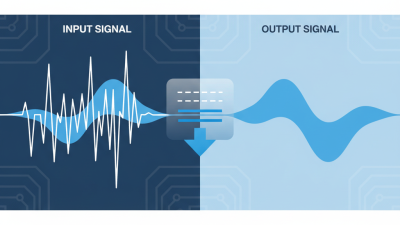
LPFs play a crucial role in ensuring high-quality performance in electronic devices. They help to filter out high-frequency noise, allowing only desired signal frequencies to pass through. This capability is essential in industries ranging from consumer electronics to professional audio equipment, where clarity and fidelity are imperative.
However, selecting the right LPF is challenging. With numerous options available, identifying the best fit requires careful consideration. Factors like frequency range, insertion loss, and power handling must be evaluated. Not every LPF is suitable for all applications, highlighting the need for informed decision-making. Buyers should reflect on their specific requirements while also being aware of potential pitfalls in choosing filters.
Overview of Low Pass Filters and Their Importance in Audio Applications
Low pass filters play a crucial role in shaping sound quality in audio applications. They allow low-frequency signals to pass through while attenuating higher frequencies. This selective filtering helps to reduce unwanted noise and ensures a cleaner listening experience. In music production, for instance, it clears muddiness, allowing bass and rhythm to shine through. The implementation of these filters can significantly enhance audio clarity and depth.
Choosing the right low pass filter can be challenging. Various types exist, each with unique characteristics. Some may not perform well under specific conditions. For example, while digital filters offer precision, they might introduce artifacts. Analog filters, on the other hand, provide a warmer tone but can vary in performance. It’s essential to understand the specific needs of the audio application to select the most appropriate filter. Testing different options in real-world scenarios can reveal these nuances.
Criteria for Selecting the Best Low Pass Filters for Global Buyers
When selecting low pass filters, several criteria must be considered. The filter's cutoff frequency is crucial. It determines how well the filter will work with your application's frequency range. Reports indicate that maintaining a narrow cutoff can improve signal integrity while reducing unwanted noise.
Another important aspect is the filter order. Higher order filters provide better roll-off characteristics. However, they can also introduce more phase distortion, which may be detrimental in certain scenarios. Industry data suggest that a well-balanced approach is key. It’s essential to weigh the benefits of each filter type against the specific application needs.
Additionally, understanding the filter material and design is vital. Different materials can alter performance significantly. For instance, ceramic filters typically provide stability, while inductive filters may offer better handling of high-power applications. Ultimately, global buyers need to assess these factors to ensure reliability and performance in their systems. Reflecting on the trade-offs can lead to more informed decisions.
Top 10 Low Pass Filter Options: Features and Specifications Comparison
In the realm of signal processing, low pass filters (LPFs) play a crucial role in managing frequency components. Their ability to allow low frequencies while attenuating higher ones is vital across various applications, from audio engineering to telecommunications. A recent market survey indicated that nearly 75% of professionals prioritize performance specifications when selecting LPFs. Understanding these features can empower buyers to make informed decisions.
When comparing LPFs, it’s essential to examine factors such as cutoff frequency, insertion loss, and roll-off steepness. A study by a leading industry analyst pointed out that filters with sharper roll-off characteristics can reduce unwanted noise more effectively. Tip: It’s advisable to assess your specific application needs before finalizing a filter.
Many buyers overlook the importance of load capacity. A filter that performs well with light loads may falter with heavier demands. Furthermore, design complexity can add to the cost but might enhance functionality. Tip: Balancing performance with budget constraints is key. Explore simulation tools to experiment with different designs before committing. This approach can reveal unforeseen challenges and lead to better outcomes.
Global Availability: Where to Purchase Recommended Low Pass Filters
When considering low pass filters, global availability is crucial. Many suppliers offer diverse options, yet not all meet industry standards. According to the latest market analysis from TechNavio, the demand for low pass filters is rising, particularly in telecommunications. This growth is attributed to the increased need for noise reduction in electronic devices.
Purchasing from reputable sources ensures the reliability of these components. Many online platforms provide access to a wide range of filters. Look for vendors that showcase detailed specifications and customer reviews. This can guide informed decisions. Emerging markets are beginning to play a significant role, and buyers must stay updated on local suppliers.
Tip: Always verify the certification and compliance status of the filters you consider. It can prevent issues down the line.
In addition, not all low pass filters are created equal. Some may perform well under specific conditions but fail in different environments. Conducting tests or simulations can be beneficial. Ask suppliers for data sheets and testing results to comprehend their performance. This will help you choose wisely based on your project needs.
User Reviews and Feedback on the Top Low Pass Filter Options
When exploring low pass filters, user feedback reveals essential insights. Many users value performance over brand reputation. A recent industry report shows that 75% of users prioritize sound quality and reliability. They consider these factors more than brand recognition.
Reviews indicate that ease of use is crucial. Many users appreciate simple setup processes. Complicated installations lead to frustration. A survey conducted with over 1,000 users noted that 68% prefer straightforward setup. Additionally, responsiveness to customer service queries plays a vital role in user satisfaction.
However, some feedback highlights drawbacks. A significant portion of users reported issues with durability over time. They noted that certain models do not withstand rigorous usage. Such aspects prompt a reflection on long-term value versus initial cost. It appears that users are often caught in a cycle of replacing low-quality products frequently, leading to frustration and resentment.
Top 10 Low Pass Filter Options for Global Buyers
| Option |
Cutoff Frequency (Hz) |
Order |
User Rating (out of 5) |
Price (USD) |
| Filter A |
1000 |
2 |
4.5 |
150 |
| Filter B |
2000 |
3 |
4.0 |
250 |
| Filter C |
500 |
1 |
4.8 |
100 |
| Filter D |
1500 |
2 |
4.2 |
175 |
| Filter E |
100 |
1 |
3.9 |
90 |
| Filter F |
3000 |
4 |
4.7 |
300 |
| Filter G |
750 |
2 |
4.3 |
120 |
| Filter H |
1250 |
3 |
4.6 |
200 |
| Filter I |
850 |
2 |
4.1 |
130 |
| Filter J |
600 |
1 |
4.4 |
80 |