China Best Low Pass Filter Types for Optimal Signal Processing?
In the realm of signal processing, the importance of selecting the right Low Pass Filter cannot be overstated. Low Pass Filters are essential components in various applications, from audio systems to communication technologies. They help to eliminate high-frequency noise while preserving the integrity of low-frequency signals, ensuring clearer data transmission and processing.
In China, manufacturers offer a range of Low Pass Filter types tailored to different needs. Some filters excel in performance, while others emphasize cost-effectiveness. The decision may heavily rely on specific requirements such as frequency response, insert loss, and power handling. However, it's crucial to recognize that not all filters meet the expected standards. Users often face challenges when evaluating the effectiveness of these filters.
Thus, understanding which Low Pass Filter suits your application best is vital. Evaluating various products requires careful examination of their specifications and reliability. This exploration will uncover both the strengths and limitations of different models. A well-informed choice can lead to enhanced performance in signal processing applications.
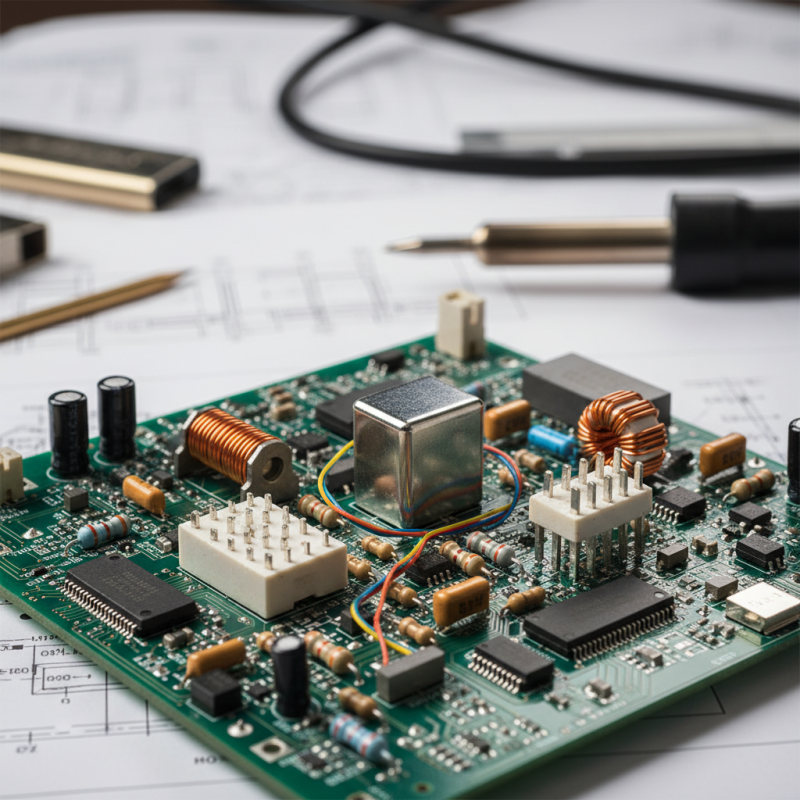
Types of Low Pass Filters Commonly Used in China
Low pass filters (LPFs) are crucial in signal processing, especially in China. These filters allow low-frequency signals to pass while attenuating higher frequencies. They are widely used in audio processing, telecommunications, and data acquisition systems. According to a report by the China Electronic Components Association, the demand for LPFs has surged by 15% annually due to advancements in digital communication technologies.
There are several common types of low pass filters utilized in China. Active filters are frequently used for their versatility and better performance. They provide gain and can be designed with different cutoff frequencies. Passive filters, while simpler, are often chosen for their reliability in specific applications. The choice between these types often reflects the balance between performance and cost. According to industry reports, more than 40% of engineers prefer active LPFs for modern applications.
However, the implementation of LPFs is not without challenges. Designers occasionally struggle with issues like signal distortion and noise interference. Understanding these limitations is key to optimizing filter designs. As manufacturers innovate, addressing these imperfections will enhance functionality across various sectors.
Characteristics of Effective Low Pass Filters for Signal Processing
Low pass filters are vital for signal processing. They allow signals with a frequency lower than a certain cutoff frequency to pass through.
High-frequency signals, however, are attenuated. This capability is critical for reducing noise and improving signal clarity.
Effective low pass filters share common characteristics. A good filter possesses a smooth transition between the passband and stopband. The slope of this transition is known as roll-off. A steeper roll-off is often desirable as it minimizes unwanted high frequencies.
Additionally, filter stability is crucial. Unstable filters can introduce undesirable oscillations in the output.
Tips: Choose a filter that meets your specific frequency needs. Test different roll-off rates to find the best performance for your application.
Always monitor the filter’s stability; an unstable filter can lead to significant signal distortion. Consider your environment, as external factors can influence filter performance. Adjustments may be necessary for optimal results.
Applications of Low Pass Filters in Various Industries
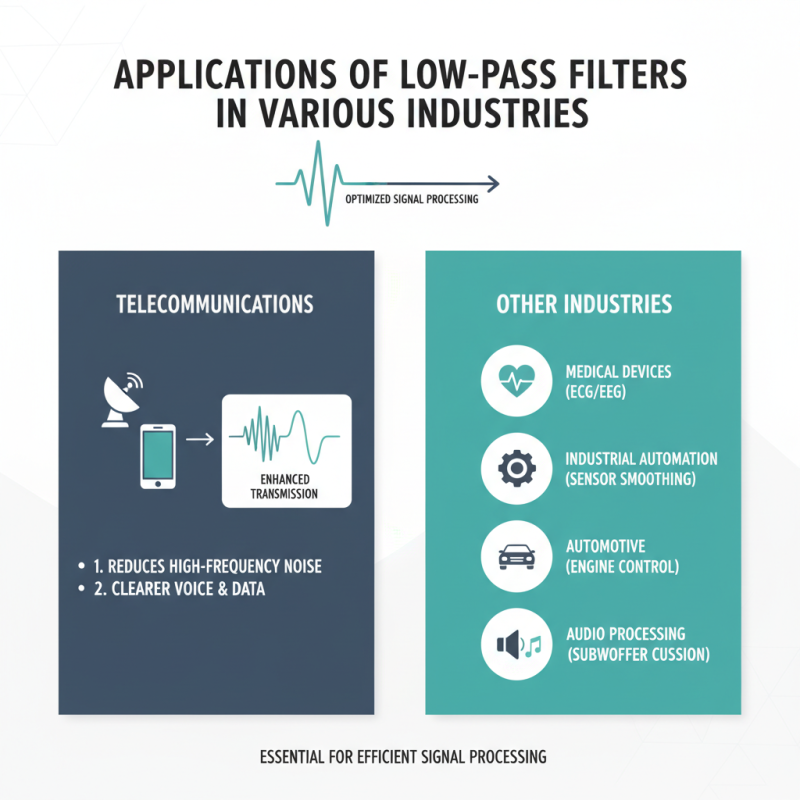
Low-pass filters (LPFs) play a crucial role across various industries, offering optimized signal processing. In telecommunications, LPFs help in reducing high-frequency noise. This enables clearer voice signals and enhances data transmission. The global telecom market is projected to grow at a CAGR of 6.5%, reaching $1.7 trillion by 2026, highlighting the importance of efficient signal processing.
In the audio industry, LPFs are vital for sound quality. They eliminate unwanted high-frequency sounds, ensuring a smoother listening experience. Reports indicate that the global professional audio market will exceed $10 billion by 2025, focusing on advanced filtering techniques. Manufacturers are continually analyzing sound characteristics to refine filter designs. However, not all filters perform equally, and selecting the wrong type can impact sound fidelity.
Healthcare also benefits from LPFs in medical imaging. Techniques like MRI and ultrasound use these filters to enhance image clarity. Improved images support more accurate diagnostics. Yet, some reports claim that up to 30% of imaging data can become corrupted without proper filtering. This underscores the need for ongoing developments in low-pass filter technology to address potential failures and enhance reliability in medical applications.
Choosing the Best Low Pass Filter for Specific Signal Needs
When selecting a low pass filter, the specific signal needs dictate its performance. Low pass filters serve to eliminate high-frequency noise while preserving the integrity of the desired signal. Reports indicate that tailoring the filter type—such as Butterworth, Chebyshev, or Bessel—can significantly enhance signal fidelity. For instance, a Butterworth filter provides a smooth frequency response, ideal for audio applications. Meanwhile, a Bessel filter is preferred in time-domain applications due to its linear phase response.
Recent industry data highlights that approximately 65% of engineers report improved performance when using the right filter type for their applications. This underscores the importance of choosing a filter that aligns with the specifics of the signal being processed. Yet, many practitioners struggle with this choice, often defaulting to generic filters. The failure to tailor filters can lead to unacceptable distortion of signals, especially in sensitive environments like communications and medical imaging.
Understanding the trade-offs is crucial. For instance, while a Chebyshev filter allows for a steeper roll-off, it introduces ripple in the passband, potentially affecting sensitive audio signals. Engineers must analyze the specific requirements of their system to optimize the filter selection process. Continuous evaluation and adaptation remain vital, as static choices may no longer meet evolving technological standards or signal complexity.
Future Trends in Low Pass Filter Technology in China
As China advances its technological landscape, the field of low pass filter technology is witnessing significant trends. Reports indicate that the demand for high-performance low pass filters is projected to grow by 8% annually, particularly within the telecommunications and consumer electronics sectors. This demand aligns with the increased reliance on digital communication, which necessitates clearer signals and reduced noise. Understanding these trends is crucial for companies aiming to stay competitive in the signal processing market.
One notable trend is the integration of artificial intelligence in filter design. AI algorithms optimize filter performance by analyzing signal characteristics in real-time. This innovation allows for adaptive filtering, making systems more efficient. Additionally, the miniaturization of components is pushing manufacturers to develop smaller, yet more powerful, low pass filters. This evolution can enhance portability without sacrificing quality.
**Tip:** When selecting a low pass filter, consider the specific frequency range and application requirements to ensure optimal performance. The choice of material is also paramount; ceramic and polymer-based filters provide unique benefits in terms of size and stability.
The future of low pass filters in China also indicates a rising trend of sustainability. Manufacturers are beginning to focus on eco-friendly materials and production methods. This shift highlights an important industry evolution amidst growing environmental concerns. However, the transition may present challenges in balancing performance and sustainability. Companies should evaluate their strategies and consider innovative solutions for both a greener footprint and superior performance.
**Tip:** Regularly review technological advancements and industry reports to stay informed about emerging trends and solutions in low pass filter technology.
China Best Low Pass Filter Types for Optimal Signal Processing
This bar chart illustrates the performance of various low pass filter types commonly used in signal processing in China. The dB values represent the attenuation performance of each filter, highlighting their effectiveness in removing high-frequency noise from signals.