How to Choose Low Frequency Filters for Your Projects?
When embarking on audio or signal processing projects, selecting the right components is crucial. One essential component is the Low Frequency Filters. These filters help to manage unwanted frequencies. They can enhance sound quality and precision in your project. However, the selection process can be daunting.
Different projects have varying requirements. Some need sharper cutoffs, while others demand smoother transitions. Evaluating your project's frequency spectrum is essential. Low Frequency Filters can deeply impact the final output. Understanding the types available is key. Not all filters serve the same purpose or work equally well.
Experience shows that trial and error is often part of the journey. Theoretical knowledge must be applied practically. Testing various filters can reveal unexpected results. Reflecting on these experiences will guide future choices. Ultimately, the right Low Frequency Filters can elevate your project, but the process requires careful consideration and hands-on testing.
Understanding Low Frequency Filters: Types and Applications
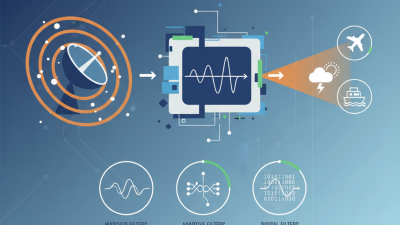
Low frequency filters are crucial in various audio and electronic projects. They serve to attenuate undesired low-frequency signals while preserving higher frequencies. Understanding the types of low frequency filters can significantly impact your project's success. The most common types include passive filters, active filters, and digital filters, each with specific applications.
Passive filters utilize resistors, capacitors, and inductors. They are simple and reliable, but they can be less effective in certain scenarios. For example, they may not handle power amplification well. Active filters, on the other hand, employ operational amplifiers. They are more versatile and can provide better performance in complex applications. However, they require external power sources.
Digital filters, typically implemented in software, can offer precise control. Yet, they may introduce latency and complexity in design.
When selecting a low frequency filter, consider your project's unique needs. Specific parameters, such as cut-off frequency and slope, should match your requirements. Experimenting with different types can reveal surprising insights. It's essential to acknowledge that no single solution fits all situations; reflection and adjustment may lead to better results. Embrace the learning curve associated with filter design to enhance your understanding.
Key Factors to Consider When Selecting Low Frequency Filters
When selecting low frequency filters, several key factors come into play. Understanding the application is crucial. Are you working on audio processing, or perhaps a signal analysis project? Each application has unique needs. Depending on the purpose, the required cut-off frequency will vary. This frequency impacts how the filter performs in your specific environment.
Another essential factor is the filter’s order. A higher order filter can provide sharper cut-off characteristics. However, it may introduce phase shift. This phase shift could affect your overall system performance. Evaluating the trade-offs between sharpness and phase response is vital. It can be easy to overlook this aspect, but doing so might lead to unexpected issues.
Additionally, consider the quality factor, or Q, of the filter. A higher Q value will result in a more resonant peak. This can enhance particular frequencies but may also introduce unwanted noise. It’s important to analyze what’s prioritizing in your project. Testing different configurations can be helpful. Sometimes, tolerances in components lead to variations. Recording these results offers deeper insights. Reflecting on these choices will improve future decisions.
Analyzing Filter Specifications: Cut-off Frequency and Order
Choosing low frequency filters requires careful analysis of specifications. The cut-off frequency is a crucial parameter. It defines the point where the filter begins to attenuate signals. For example, a cut-off frequency of 200 Hz means signals above this frequency will be reduced.
The order of the filter also plays a significant role. Higher-order filters provide steeper roll-off rates. This means they can more effectively eliminate undesired frequencies. A first-order filter might suffice for basic applications. However, in more complex projects, a higher-order filter could be necessary for precision.
When selecting filters, consider your specific needs. Visualize the outcome you want. Will a simple design work, or do you need more complexity? A filter with an appropriate cut-off frequency and order can greatly enhance signal integrity. Reflect on your application and adjust your choices accordingly. Filters aren’t always perfect, and each decision presents an opportunity for reflection and improvement.
Comparing Passive vs. Active Low Frequency Filters
When it comes to low frequency filters, understanding the difference between passive and active options is essential.
Passive filters, composed of resistors, capacitors, and inductors, are simpler and more durable.
They do not require a power source, making them a reliable choice for many projects.
According to industry reports, passive filters are often preferred for basic applications, offering decent performance without added complexity.
However, they tend to have lower attenuation rates and can introduce phase shifts.
This can affect overall sound quality in audio applications.
On the other hand, active low frequency filters utilize operational amplifiers.
This allows for better performance, higher gain, and sharper roll-off characteristics.
A report from the Institute of Electrical and Electronics Engineers states that active filters can provide up to 20 dB of gain, making them suitable for more professional setups.
They require a power supply, increasing complexity and cost.
Users must weigh these factors carefully.
Active filters offer more flexibility but may introduce noise if not designed well.
This requires a balance between budget and desired sound quality.
Each project demands its own assessment to find the right fit.
Common Use Cases and Best Practices for Low Frequency Filtering
When selecting low-frequency filters for a project, understanding their applications is crucial. Low-frequency filtering is commonly used in audio engineering, environmental monitoring, and telecommunication systems. According to a report by the International Society of Automation, nearly 75% of professionals in these fields prioritize low-frequency filtering for noise reduction. This practice ensures cleaner signals and reduces unwanted artifacts.
In audio applications, low-frequency filters can enhance sound quality. They help remove hum and rumble, creating a more pleasant listening environment. Using an efficient low-pass filter can optimize bass response in music production. Studies show that improper filtering could lead to significant data loss and distortions in sound quality. This highlights the importance of testing various filter designs before finalizing one.
When implementing low-frequency filters, the choice of cutoff frequency is essential. Many engineers recommend a cutoff between 50 Hz to 200 Hz for most applications. However, each project may have unique demands. Referring to industry standards can guide selection but requires careful evaluation in practice. Experimenting with different configurations can lead to improved outcomes. The key lies in balancing theoretical knowledge with practical insights.
How to Choose Low Frequency Filters for Your Projects? - Common Use Cases and Best Practices for Low Frequency Filtering
| Use Case |
Filter Type |
Cut-off Frequency (Hz) |
Order |
Implementation Notes |
| Audio Processing |
Low-Pass Filter |
200 |
4th |
Used to remove high frequency noise from audio signals. |
| Vibration Analysis |
Band-Pass Filter |
5 - 50 |
2nd |
Focuses on significant vibration frequencies to assess machinery health. |
| Seismic Data |
High-Pass Filter |
0.1 |
3rd |
Removes low-frequency noise from seismic readings to improve data clarity. |
| Medical Imaging |
Low-Pass Filter |
1 - 10 |
4th |
Enhances image quality by removing high-frequency artifacts. |
| Data Smoothing |
Moving Average Filter |
N/A |
1st |
Simple and effective for reducing noise in time series data. |