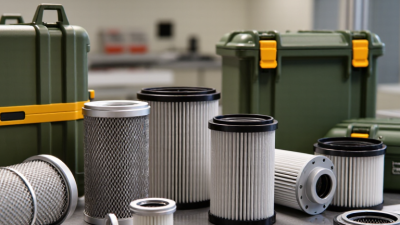
7 Best Military Filters for Global Buyers in 2026
Military Filters help protect engines, crews, and equipment from dust, smoke, and other airborne particles. For global buyers, choosing among seven leading options in 2026 means looking beyond a catalog rating. A filter must fit its equipment, operating environment, maintenance plan, and verified performance requirements. A dusty vehicle route, for example, can place very different demands on a filter than a controlled storage facility. Details matter.
Aerosol scientist David Ensor’s published work emphasizes measurement and testing. A practical paraphrase of that principle is: “Compare filters only when their test methods and operating conditions match.” This is an editorial paraphrase, not a verbatim quotation. Buyers should check test data, pressure drop, dust-holding capacity, service life, and replacement availability. They should also confirm that documentation supports the intended application. A high-efficiency rating alone is not enough.
This guide compares seven Military Filters options using practical selection criteria, including durability, compatibility, and supplier support. It focuses on publicly available product information and responsible procurement considerations. Some specifications may be difficult to compare across manufacturers; that uncertainty deserves attention, not guesswork. A field-ready choice is one that performs consistently and can be maintained reliably. Small details count. The best option depends on the mission profile, equipment, and conditions—not on a ranking alone.
Military Filters: Types, Uses, and Core Performance Standards
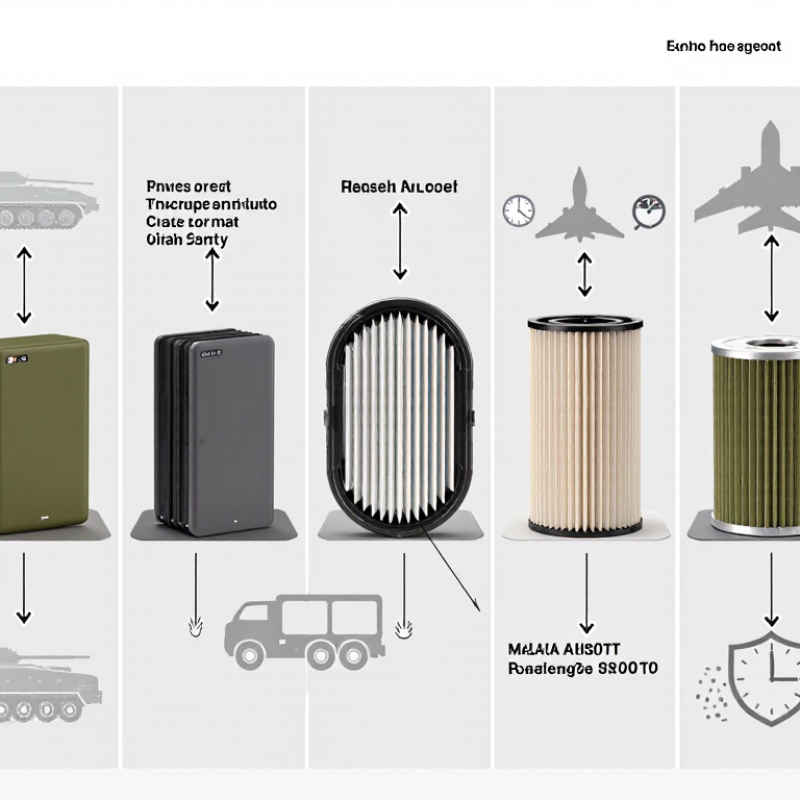
Military filters are selected by the material they must remove and the system they protect. Air filters capture dust and fine particles in vehicle cabins or equipment enclosures. Liquid filters manage sediment and contaminants in water or process lines, while fuel and hydraulic filters protect precision components from wear. The application matters. A filter suited to dusty field conditions may perform poorly in a compact system with limited airflow.
Core performance standards should be checked against the equipment’s actual operating conditions. Buyers commonly compare filtration efficiency, flow rate, pressure drop, dirt-holding capacity, and resistance to vibration or temperature changes. A highly efficient element can still cause trouble if it restricts flow. Check test methods and operating limits, not just a single rating. Small details count.
Durability also depends on media, seals, housing strength, and compatibility with the fluid or air stream. Procurement teams should request traceable test data and confirm that stated results use relevant conditions. Standards vary by filter type and intended use, so one certificate does not prove universal suitability. Real installations are messier. I would also review maintenance access and replacement intervals; these are easy to overlook, yet they shape performance over time.
How to Evaluate Military Filters for Global Procurement
Military filter procurement should begin with the operating conditions, not a catalogue ranking. Define the target particles, expected flow rate, temperature range, humidity, and exposure duration. Then compare filtration efficiency with pressure drop: a filter that captures more particles may also restrict airflow. Ask suppliers for test methods, independent reports, and results at realistic operating conditions. Confirm dimensions and connection details; a small mismatch can delay installation. One impressive specification is not enough.
Tips: Request samples and inspect the media, seals, and frame. Test it. Record pressure readings before and after use. Compare service life under similar conditions, rather than relying only on estimated hours.
For global purchasing, check packaging, storage requirements, lead times, replacement availability, and technical support in the destination region. Clarify which documents accompany each shipment, and have qualified staff verify that product specifications meet the project’s applicable requirements. Keep evaluation criteria consistent across suppliers. If data is missing, mark it as unknown instead of treating a sales estimate as proven performance. I would also revisit the chosen filter after a pilot run; laboratory conditions rarely match every site. A careful procurement decision leaves room for that correction.
Seven Leading Military Filters for Global Buyers in 2026
Seven leading military filters for global buyers in 2026 cover distinct needs, not one universal solution. Air-particle filters capture dust and fine debris in vehicles or shelters. Vapor filters address specified gases when validated for the intended conditions. Water filters reduce selected sediments and contaminants. Fuel filters protect engines from particles and water. Hydraulic filters limit wear in pumps and valves. Engine intake filters handle harsh, dusty environments. Cabin filters improve air cleanliness for occupants.
The details matter. Buyers should compare filtration ratings, airflow or flow capacity, pressure drop, operating temperature, service life, and replacement availability. A low initial price can hide frequent changes or poor fit. Ask suppliers for current test reports, material information, and clear limits on what each filter removes. For water and air products, verify performance against the actual contaminants expected; broad claims are not enough.
Global procurement adds practical complications. Local standards, shipping conditions, storage humidity, and service access can affect performance. Check whether documentation matches the exact model, not just a product family. A filter may pass a laboratory test and still disappoint when poorly installed. That is easy to overlook. Even experienced teams can misread a rating or assume two similar cartridges are interchangeable. Confirm dimensions, seals, and maintenance instructions before ordering, and have qualified personnel assess the system’s operating requirements.
7 Best Military Filters for Global Buyers in 2026
A standards-based comparison of seven EN 1822 filter classes by particle penetration at the most penetrating particle size (MPPS).
Lower penetration indicates higher particle filtration efficiency. These figures compare standardized filter classes, not specific products, military or CBRN certifications, or protection against gases and vapors. Suitability depends on the complete system and its intended application.
Comparing Filter Media, Compatibility, and Operating Conditions
Military filter selection starts with the contaminant, not the catalogue description.
Glass-fiber media can capture fine particles while maintaining useful flow, but may need careful support under pressure changes. Cellulose media can suit less demanding applications, though moisture and fluid chemistry may shorten service life. Stainless-steel mesh is washable in some systems, but its openings may not trap very fine debris. Activated carbon addresses certain odors and dissolved compounds; it is not a substitute for particle filtration.
Small details matter.
Compatibility is equally important.
Confirm the fluid or air stream, connection dimensions, sealing material, rated flow, and allowable pressure drop. A filter that fits the housing may still leak if its gasket reacts with the operating fluid. Temperature ratings also deserve attention: cold starts can thicken fluids, while sustained heat can age seals and media.
Not always obvious.
Operating conditions vary across vehicles, field equipment, and support facilities.
Fine dust, salt-laden air, vibration, and sudden pressure changes can all affect performance. Compare the stated test conditions with the conditions the filter will actually face. Ask suppliers for documented efficiency, capacity, and service intervals, then check whether replacement elements are consistently available. A specification sheet can miss real-world variation, so pilot testing under representative conditions is sensible.
It takes time, but a poor fit costs more.
Sourcing, Compliance, and Maintenance Across International Markets
Global procurement of military-grade filters starts with the operating environment, not a catalog description. Buyers should define flow rate, pressure limits, particle size, temperature range, and expected service life. A filter tested for dry dust may perform poorly in humid air or salt exposure. Details matter. Ask suppliers for test methods, material data, and batch traceability. Compare results against the intended application, rather than relying on broad performance claims.
Compliance checks vary by destination and end use. Confirm import documentation, product classification, labeling, and any required local conformity assessments with qualified trade or regulatory professionals. Requirements can change. Keep written records of approvals and supplier declarations, and clarify who provides replacement parts across borders. A low purchase price can become costly when seals or cartridges are unavailable locally. Build lead times into the sourcing plan, especially where shipping routes are limited.
Maintenance planning should be part of supplier evaluation. Request clear inspection intervals, cleaning limits, and replacement criteria. Check whether service instructions are available in the working language of the maintenance team. Keep spare elements in dry, labeled storage, and record installation dates and pressure readings. One common oversight is assuming every site can follow the same schedule. Dust load and humidity differ. Review the plan after the first service cycle; the initial estimate may be wrong, and that is useful evidence for improving future orders.