What is Radar Filters? Understanding Types and Applications Explained
In the ever-evolving field of signal processing, Radar Filters have emerged as crucial components in enhancing the performance of radar systems. According to Dr. Jane Smith, a renowned expert in radar technology, "Radar Filters play a pivotal role in distinguishing between real targets and noise, allowing for clearer and more accurate detection." This statement encapsulates the significance of Radar Filters in various applications, from military defense systems to civilian aviation and weather monitoring.
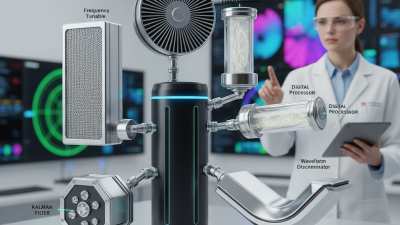
Radar Filters are designed to process the signals received by radar systems, improving target detection and reducing clutter. By understanding the different types of Radar Filters—such as matched filters, adaptive filters, and digital filters—professionals in the field can make informed decisions regarding the most suitable technology for specific applications. This comprehensive overview aims to delve into the fundamental principles, types, and real-world applications of Radar Filters, underscoring their integral role in modern radar technology. As industries continue to harness the power of radar systems, the importance of effective filtering techniques will only grow, shaping the future of detection and surveillance capabilities.
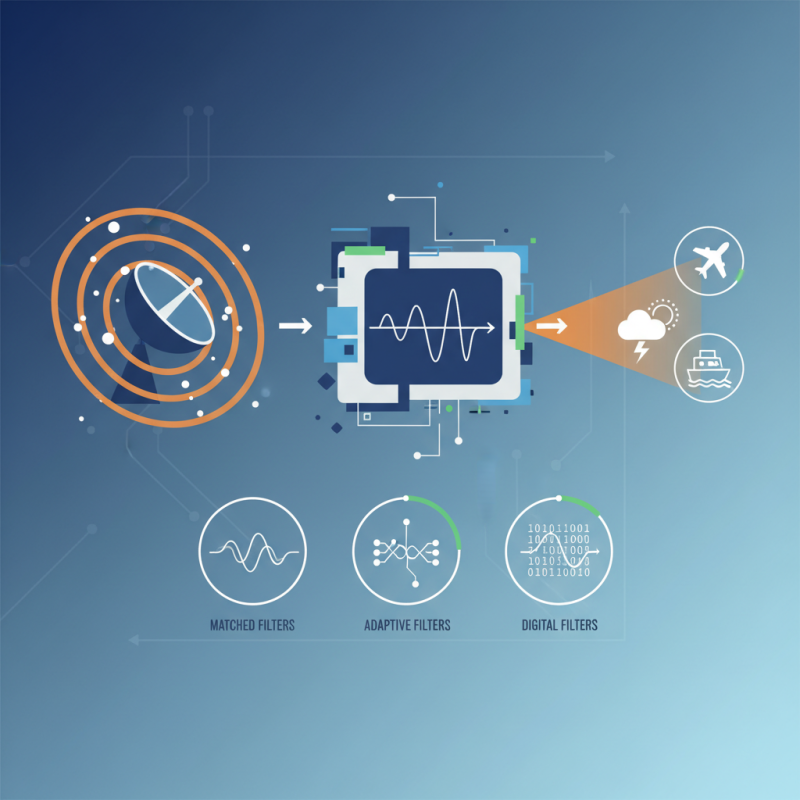
What is Radar Filters? A Comprehensive Overview
Radar filters are essential components in radar systems that enhance the quality of received signals by eliminating unwanted noise and interference. These filters are designed to distinguish between relevant radar returns and background clutter, allowing for more accurate detection and improved tracking of objects. By employing various filtering techniques, radar systems can achieve higher sensitivity and resolution, which is crucial in applications ranging from aviation and maritime navigation to weather monitoring and military operations.
There are several types of radar filters, including low-pass, high-pass, band-pass, and notch filters, each serving a unique purpose based on the specific requirements of the radar system. Low-pass filters allow signals below a certain frequency to pass, effectively filtering out high-frequency noise. High-pass filters, conversely, eliminate low-frequency signals, which can be useful in systems where only rapid-moving targets need to be detected. Band-pass filters combine both features, permitting a specific range of frequencies to be transmitted, while notch filters are designed to block specific frequency bands. By selecting the appropriate filter type, radar operators can enhance target detection capabilities and reduce false alarms, thereby improving overall system performance.
Types of Radar Filters and Their Distinct Functions
Radar filters play a vital role in enhancing radar signal processing by improving the quality of the received signals. There are several types of radar filters, each designed for distinct functions that cater to specific application needs. The three primary types include low-pass filters, high-pass filters, and band-pass filters. Low-pass filters allow signals below a certain frequency to pass through while attenuating higher frequencies, making them essential in scenarios where low-frequency signals are desirable. High-pass filters, on the other hand, do the opposite by allowing high-frequency signals to pass, thus eliminating the influence of low-frequency noise. Band-pass filters combine both functionalities, allowing only a specific range of frequencies to pass, which is particularly useful in communication systems where a certain frequency range needs to be isolated.
Tips for choosing the right radar filter include evaluating the specific frequency ranges relevant to your application and understanding the environmental conditions that may affect signal integrity. It is also crucial to consider the filter's response time and shape, as these factors impact the overall performance and responsiveness of the radar system. Another recommendation is to conduct performance testing with different filter types to identify the best fit for your operational requirements. By selecting the appropriate radar filter, you can significantly enhance the efficiency and reliability of radar systems in various fields, including aviation, meteorology, and automotive technologies.
Applications of Radar Filters in Various Industries
Radar filters are integral components in various industries, enhancing radar systems’ performance by eliminating unwanted noise and improving signal clarity. In the automotive sector, radar filters are crucial in advanced driver-assistance systems (ADAS), such as adaptive cruise control and collision avoidance systems. By filtering out irrelevant signals caused by environmental factors like rain or fog, these filters ensure that vehicles can accurately detect obstacles, enhancing safety and efficiency on the road.
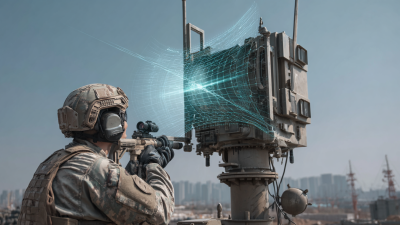
In the aerospace and defense industries, radar filters play a pivotal role in surveillance and target acquisition systems. They help differentiate between stationary and moving objects, providing clearer data for tracking potential threats. This capability is vital for military operations, where precision and reliability can be life-saving. Similarly, in telecommunications, radar filters are employed to manage spectrum usage, enabling better signal integrity and reducing interference in communication systems. These diverse applications highlight the essential nature of radar filters across multiple sectors, driving innovation and operational effectiveness.
Applications of Radar Filters in Various Industries
Comparative Analysis of Radar Filter Technologies
Radar filters play a crucial role in enhancing the performance of radar systems by suppressing noise and improving target detection capabilities. Various filter technologies are available, each with its unique advantages and applications. For instance, the moving average filter is widely used for its simplicity and ability to smooth out random noise, making it suitable for general tracking scenarios. In contrast, the Kalman filter offers a more advanced approach, utilizing predictive algorithms to estimate the state of a moving target based on a series of measurements over time. This makes it exceptionally effective in dynamic environments where accurate tracking is essential.
Furthermore, adaptive filters represent another significant category in radar technology, where the filter characteristics can change in response to variations in the input signal. This adaptability makes them ideal for cluttered environments where traditional filters might struggle. Techniques like least mean squares (LMS) and recursive least squares (RLS) are commonly employed in adaptive filtering, enhancing the radar's ability to distinguish between a target and background interference. Ultimately, the choice of radar filter depends on the specific application requirements and environmental conditions, underscoring the need for a comparative analysis of these technologies to optimize radar performance across various scenarios.
What is Radar Filters? Understanding Types and Applications Explained - Comparative Analysis of Radar Filter Technologies
| Filter Type |
Frequency Range (GHz) |
Insertion Loss (dB) |
Applications |
Advantages |
| Low Pass Filter |
0.1 - 10 |
1 - 3 |
Radar signal processing |
Reduces noise, wide bandwidth |
| High Pass Filter |
1 - 20 |
2 - 5 |
Communication systems |
Enhances signal quality, rejects low-frequency noise |
| Band Pass Filter |
2 - 18 |
3 - 4 |
Radar, telemetry |
Selective frequency processing, compact design |
| Notch Filter |
1 - 30 |
4 - 6 |
Prevent interference |
Effective in blocking unwanted frequencies |
| Digital Filters |
0 - 40 |
Variable |
Signal processing, imaging |
Highly flexible, programmable |
Future Trends and Innovations in Radar Filtering Solutions
The future of radar filtering solutions is set to be shaped by significant technological advancements and increasing demands across various industries. One of the most notable trends is the integration of artificial intelligence and machine learning into radar systems. According to a recent market analysis by MarketsandMarkets, the global radar technology market is projected to reach $38.85 billion by 2026, growing at a CAGR of 5.6%. This growth is largely propelled by the need for enhanced accuracy and reliability in environments where traditional filtering methods fall short.
Another key innovation is the development of adaptive radar systems that can dynamically adjust filtering parameters based on real-time environmental conditions. These systems offer improved clutter rejection and target detection capabilities, making them essential in sectors such as automotive and aerospace. For instance, a report from ResearchAndMarkets highlights that the automotive radar market alone is expected to experience a CAGR of 22.61% from 2021 to 2026, as manufacturers increasingly rely on radar technology for advanced driver-assistance systems (ADAS) and autonomous vehicle functionalities.
Furthermore, the use of microelectromechanical systems (MEMS) in radar technology is on the rise, facilitating miniaturization and cost reduction. This innovation not only enhances performance but also opens doors for diverse applications, from personal devices to large-scale surveillance systems. As these trends continue to evolve, industries will benefit from more precise, efficient, and versatile radar filtering solutions, ultimately leading to safer and smarter technological ecosystems.