Why Do You Need a Low Pass Filter for Your Project?
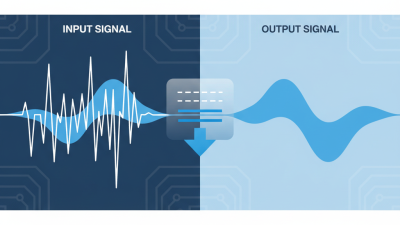
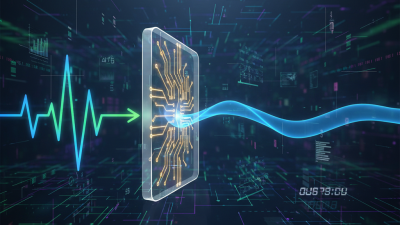
A Low Pass Filter is crucial for many projects that involve signal processing. It allows low-frequency signals to pass while attenuating higher frequencies. This capability is vital for applications like audio processing and data acquisition. Without a Low Pass Filter, unwanted noise can overwhelm your signal, leading to poor performance.
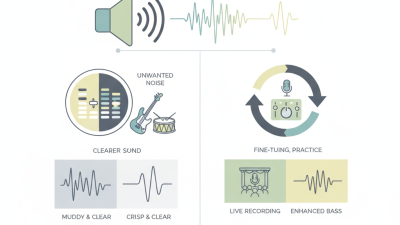
Incorporating a Low Pass Filter can improve signal clarity and reliability. For example, in audio systems, it helps produce cleaner sound by reducing high-frequency distortion. However, it’s essential to choose the right cut-off frequency. An incorrect setting can unintentionally filter out important signals, leading to undesired outcomes.
Understanding your project's specific needs is key. Take time to experiment with different filter designs. Sometimes, the best results come from trial and error. Evaluating the effectiveness of your Low Pass Filter is critical for achieving optimal performance. Recognizing its limitations and capabilities can guide your project toward success.
What is a Low Pass Filter and How Does It Work?
A low pass filter (LPF) is essential in many electronic projects. It allows low-frequency signals to pass while attenuating higher frequencies. This action is crucial for various applications, such as audio processing, signal conditioning, and noise reduction. In its simplest form, an LPF can be made using resistors and capacitors, or more complex integrated circuits can perform the same function.
Understanding how an LPF works begins with its frequency response. The cutoff frequency is where the filtering begins. Signals below this frequency pass through with minimal loss, while those above are weakened. This selective approach can clean up unwanted noise. However, designing an LPF isn't always straightforward. Engineers must consider factors like component tolerances and circuit layout. These details can impact performance and might introduce unexpected behaviors, requiring careful testing and adjustment.
Many users underestimate the importance of the cutoff frequency. Choosing it too high may not filter out enough noise. A value set too low can distort the desired signal. Striking the right balance is not just about math; it requires real-world experimentation. The use of simulation tools is helpful but never replaces practical testing. Each project may reveal nuances that require adjustments.
Applications of Low Pass Filters in Electronic Projects
Low pass filters (LPFs) play a crucial role in electronic projects by allowing low-frequency signals to pass while blocking higher frequencies. This is vital in many applications, especially in audio and signal processing. For instance, in audio systems, LPFs are used to eliminate high-frequency noise. This ensures that the sound output is clear, making listening experiences more enjoyable.
In communications, low pass filters help in reducing interference from undesired high-frequency signals. They are also essential in protecting sensitive components from high-frequency spikes, which can cause damage. Additionally, in data acquisition systems, LPFs smooth out sensor readings. This results in more accurate data representation, making it easier to analyze variations in measurements.
Despite their benefits, implementing LPFs requires careful consideration. Selecting the wrong cutoff frequency can lead to significant issues. For example, if the cutoff is too high, essential signals might be lost. Conversely, a very low cutoff could allow unwanted noise, degrading overall performance. Finding a balance is essential for optimal outcomes in any project.
Why Do You Need a Low Pass Filter for Your Project? - Applications of Low Pass Filters in Electronic Projects
| Application |
Description |
Frequency Range (Hz) |
Typical Use Case |
| Audio Processing |
Used to remove high-frequency noise from audio signals. |
20 - 20,000 |
Speakers, mixers |
| Signal Conditioning |
Helps to smoothen signal outputs in data acquisition systems. |
0 - 1000 |
Sensors, measurement systems |
| Image Processing |
Reduces high-frequency artifacts in images for a clearer view. |
0 - 60 |
Cameras, image editing software |
| Communication Systems |
Eliminates high-frequency interference in communication channels. |
300 - 3,000 |
Radio, telecommunications |
| Power Supply Circuits |
Filters out high-frequency switching noise from power sources. |
0 - 400 |
Power supplies, inverters |
Benefits of Using Low Pass Filters in Signal Processing
Low pass filters (LPFs) play a crucial role in signal processing, filtering out high-frequency noise to enhance signal clarity. By allowing low frequencies to pass while attenuating higher ones, they help improve system performance. According to research by the IEEE, the implementation of low pass filters can improve signal-to-noise ratio (SNR) by up to 30%. This is vital for applications in communications where clear signal transmission is necessary.
In audio applications, LPFs can smooth out audio signals effectively. A study published in the Journal of Audio Engineering indicates that using a low pass filter can increase listener satisfaction by reducing unwanted distortion. Musicians and sound engineers often rely on these filters to achieve a cleaner sound. While they are beneficial, improper use can lead to phase shifts and signal delays. These issues can alter the perceived quality of the audio.
Additionally, LPFs are essential in controlling bandwidth in various settings. Data suggests that about 25% of professionals in signal processing report challenges when integrating these filters into complex systems. Understanding the alignment of cut-off frequency with application requirements is key. Failing to do so can undermine the intended benefits, highlighting the need for careful design and testing of low pass filter parameters.
How to Choose the Right Low Pass Filter for Your Needs
Choosing the right low pass filter (LPF) is pivotal for any audio or signal processing project. A good LPF smooths out high-frequency noise. It ensures that your system delivers clear output without distortion. To start, consider your project's frequency range. Are you working with audio signals, or do you need to filter data in a different domain? Knowing this is essential.
Next, think about the filter type you need. Passive filters are simple and often easier to implement. Active filters offer better performance but may require more components and power. Pay attention to the cutoff frequency. This value determines what frequencies are allowed through. If you set it too high, you could lose important information. If it's too low, you might cut out essential sounds.
Finally, don't overlook the quality of the components. Different capacitors and resistors can affect performance. Measure everything, and test under varying conditions. Experimentation can lead to surprising results, good and bad. Learning from these insights will help you refine your choice. Building a solid foundation of understanding will improve your project significantly.
Impact of Low Pass Filter Cutoff Frequency on Signal Quality
This chart illustrates the relationship between the cutoff frequency of a low pass filter and the corresponding signal quality in decibels (dB). As the cutoff frequency increases, the signal quality improves, demonstrating the importance of selecting the appropriate low pass filter for your project needs.
Common Mistakes to Avoid When Implementing Low Pass Filters
Implementing low pass filters may seem straightforward, but common mistakes can derail your project. One frequent issue is choosing the wrong cutoff frequency. If the cutoff is too high, you might let unwanted noise through. If it’s too low, you may filter out important signals. Take time to analyze your signal and define the right frequency.
Another common mistake is the misunderstanding of filter order. A higher order filter provides steeper roll-off. However, this can introduce phase shifts, altering signals in unintended ways. Understanding the trade-offs will lead to better results.
Tips: Always prototype your filter circuit. Test it with various signals. Adjust based on your findings. Don't rely solely on theoretical calculations. Listening to your filter’s output can reveal issues that simulations miss. Check connections regularly; even minor errors can cause performance drops.