Top 5 High Power Filters: Essential Choices for Optimal Performance
In the world of high-performance applications, High Power Filters stand out as crucial components. These filters are designed to manage power efficiently and ensure optimal functioning of electrical systems. They help reduce noise and prevent distortion, which can impact device performance. Choosing the right filter can be a challenge due to many options available.
High Power Filters come in various designs and specifications. Some are optimized for specific frequencies, while others cater to broader ranges. Understanding the right fit for your needs is essential. This requires an analysis of your system’s requirements and operational environment. Reflection on your priorities can reveal overlooked aspects.
Investing time in selecting the best options can yield significant benefits down the line. Each choice impacts performance and reliability. Mistakes in this area may lead to inefficiencies or equipment failures. Thus, this guide will explore the top five High Power Filters, offering insights to enhance your decision-making process.

Understanding High Power Filters and Their Importance
High power filters play a crucial role in ensuring optimal performance in various applications. Understanding their function helps prevent equipment damage and power loss. These filters can significantly reduce noise and improve efficiency. Misunderstanding their importance may lead to costly mistakes in the long run.
Selecting the right high power filter requires knowing your specific needs. Do you need more noise reduction? Or do you want to enhance reliability? Reflecting on these questions helps direct your choices. Additionally, consider your equipment's voltage and current ratings. Compatibility is key for effective operation.
Tips: Regular maintenance of filters is vital. Check for any signs of wear or damage regularly. A worn filter can impact performance significantly. Moreover, educate yourself about new filtering technologies. Staying updated ensures you can make informed decisions for performance improvements.
Key Features to Look for in High Power Filters
When searching for high power filters, understanding key features is crucial. These filters must efficiently manage energy and provide optimal performance. Look for filters with a good frequency range to support your needs. This can greatly affect the overall effectiveness of your system. Efficiency ratings should also be examined closely. High efficiency minimizes energy loss, enhancing your unit's performance.
**Tip:** Always check specifications before making a decision. Sometimes, manufacturers may provide misleading information. It's easy to overlook this and be swayed by marketing claims.
Another vital feature is the filter's physical design. A robust, well-constructed filter can withstand harsh environments. Keep in mind the size and weight of the filter as it may impact installation. Compact designs can be beneficial in space-limited setups, yet they may not always perform as expected.
**Tip:** Don’t rush into buying. Take your time to consider each option thoroughly. Reflect on your previous choices—were they based on thorough research?
Top 5 High Power Filters: Detailed Reviews and Comparisons
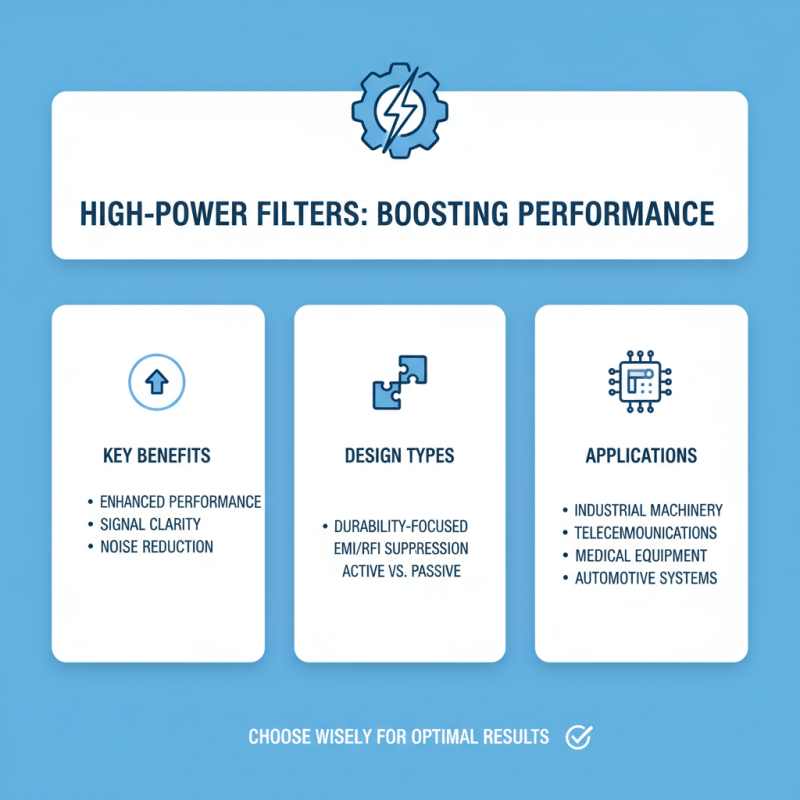
When it comes to high-power filters, choosing the right one can make a significant difference. These filters are essential for enhancing performance in various applications. Different designs exist, each with unique features that cater to specific needs. Some focus on durability, while others prioritize noise reduction or enhanced signal clarity.
In this competitive field, understanding these filters often feels overwhelming. Filters equipped with advanced technology may promise optimal performance but might not fit every situation. Not all filters are created equal. It's crucial to review their specifications carefully. For instance, some might fall short in extreme conditions. In contrast, others excel in performance but come with a steep learning curve.
Customer reviews can be insightful, but they may not provide a complete picture. Personal experiences can vary widely. A filter that worked perfectly for one application might fail in another. This factor necessitates individual testing and evaluation. Gaining a deeper understanding of each filter's characteristics can lead to better decisions when optimizing your setup.
Applications of High Power Filters in Various Industries
High power filters play a crucial role in various industries. In telecommunications, they filter unwanted signals. This ensures clear communication and effective data transfer. A recent industry report revealed that high power filters can improve signal quality by up to 40%. This is vital for the increasing demand for connectivity.
In the renewable energy sector, these filters help manage power fluctuations. They protect devices from damage. For example, wind turbines and solar panels benefit significantly. Data shows that implementing high power filters can enhance energy efficiency by 25%. However, some installations still face challenges due to high deployment costs and maintenance complexities.
Manufacturers in the automotive industry also utilize high power filters. They optimize power management in electric vehicles. The market for electric cars is projected to grow by 30% annually. Yet, not all manufacturers have integrated these filters effectively. Improper implementation can lead to performance issues. This highlights a need for better training and knowledge sharing among engineers.
Top 5 High Power Filters: Essential Choices for Optimal Performance