Low Frequency Filters Essential Tips for Global Buyers?
In today’s global market, understanding Low Frequency Filters is crucial for buyers. These filters are vital in numerous applications, including audio systems, telecommunication, and electronics. Many buyers overlook their importance. This often leads to poor purchasing decisions and subpar product performance.
Low Frequency Filters help reduce noise and enhance signal clarity. Knowing how to select the right filter can make a significant difference in overall system efficiency. However, the choices can be overwhelming. Various factors influence filter performance, such as cutoff frequency and design specifications. A well-informed buyer must weigh these factors carefully.
Buyers need to educate themselves on different types of filters available in the market. This awareness will help them avoid common pitfalls. Research is key, yet many buyers may skip this step. The consequences can be costly. Choosing the right Low Frequency Filters requires diligence and experience, ensuring reliability and effectiveness in performance.
Understanding Low Frequency Filters: A Comprehensive Overview
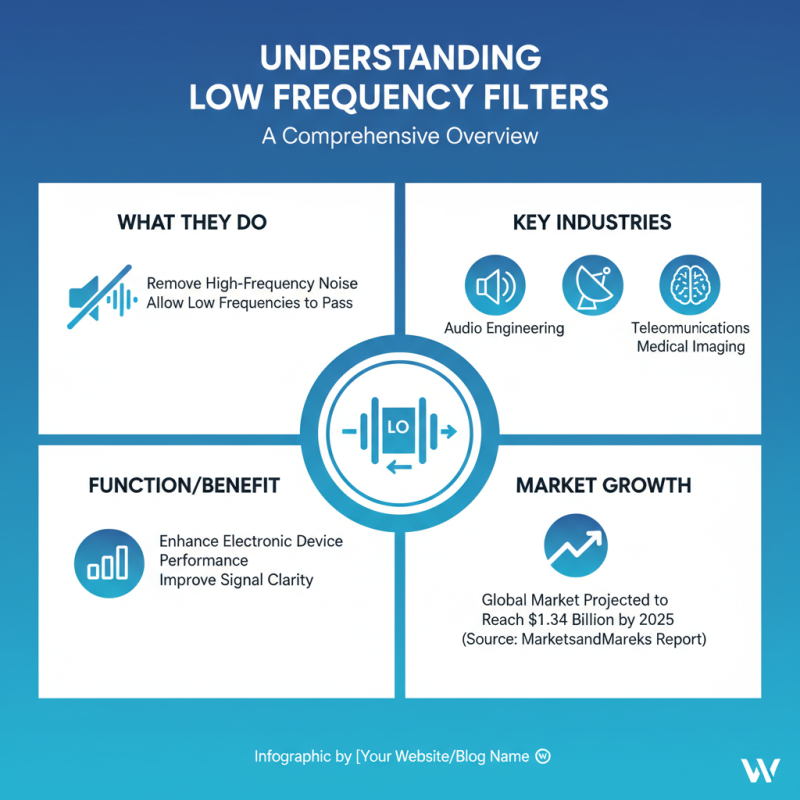
Low frequency filters play a crucial role in various industries, such as audio engineering, telecommunications, and medical imaging. These filters are designed to remove high-frequency noise, allowing only lower frequencies to pass through, which enhances the performance of electronic devices. According to a recent report by MarketsandMarkets, the global low frequency filter market is projected to reach $1.34 billion by 2025, showcasing their increasing importance.
When selecting low frequency filters, it’s vital to consider key specifications. Look for filters with specific cut-off frequencies tailored to your application. The quality factor, or Q-factor, indicates how sharply the filter can distinguish between frequencies. High Q-filters can achieve better selectivity.
**Tip:** Always review the filter's insertion loss and return loss to ensure optimal performance in your system. Evaluating these metrics can save costs and enhance efficiency.
In some cases, buyers might overlook compatibility with existing systems. Filters must be tested with current equipment to avoid integration issues. It's also essential to consider the filter's size, as space limitations can affect installation.
**Tip:** Keep records of previous filter performances. This data can guide future purchases and help you avoid repeated errors. Remember, experience adds valuable insights into better decision-making.
Key Features to Consider When Purchasing Low Frequency Filters
When purchasing low frequency filters, certain key features should always be top of mind. The cutoff frequency is crucial. Filters should offer precise control over the frequencies they allow. Industry reports indicate that filters operating between 20Hz to 200Hz often yield optimal results for various applications. These ranges can significantly improve audio clarity and reduce distortion when correctly applied.
Construction materials are another essential aspect. Filters made from high-quality components tend to provide better durability and performance. Research shows that metal film resistors and ceramic capacitors outperform their counterparts in frequency response stability. This variance can lead to a ripple effect in overall system performance.
Buyers should also be aware of environmental factors. When not carefully considered, temperature and humidity can affect filter efficiency. An interesting study revealed that as temperature rises, filter performance could drop by as much as 15%. Acknowledging these factors is vital for any serious buyer. Reflections on these details can lead to better choices that enhance the user's experience significantly.
Types of Low Frequency Filters: Explained for Global Buyers
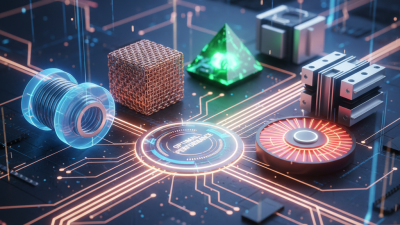
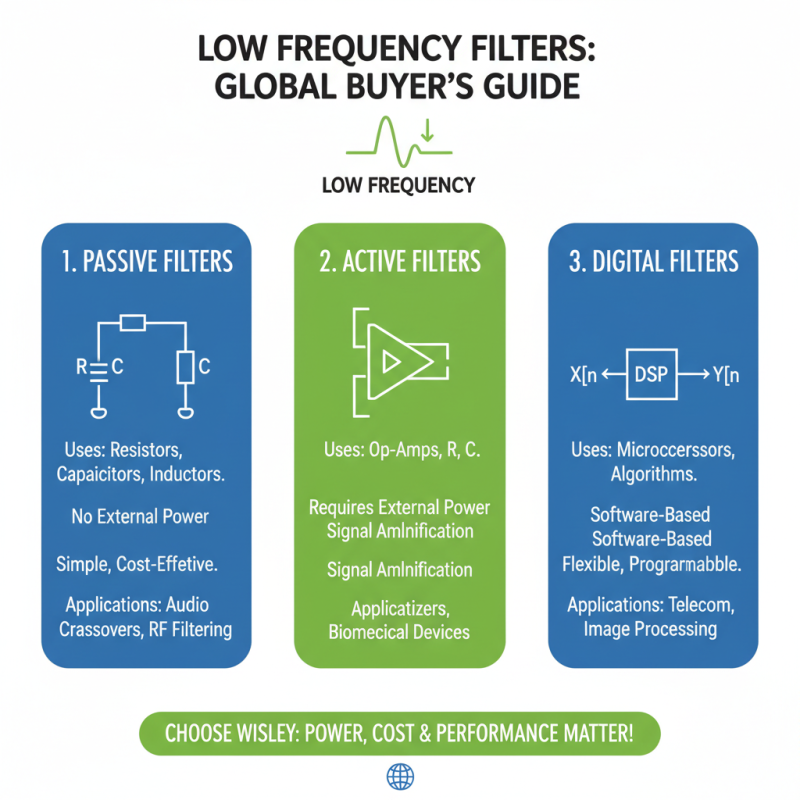
Low frequency filters are crucial in various fields, including telecommunications and audio engineering. Understanding the types of these filters can help buyers make informed decisions. Generally, there are three main types: passive, active, and digital filters.
Passive low frequency filters use resistors, capacitors, and inductors. They are simple and cost-effective but have limitations in performance. An industry report from the International Journal of Electronics mentions that passive filters can achieve approximately 20 dB attenuation. This level may not suit all applications. Active low frequency filters, on the other hand, provide higher performance. They can amplify signals and adjust frequencies with greater precision, making them ideal for complex systems.
Digital low frequency filters leverage advanced algorithms to process signals. These filters offer unmatched flexibility and control. A recent market analysis indicates that digital filters are gaining popularity due to enhanced processing capabilities. However, they require technical expertise to implement effectively. Buyers need to weigh the benefits against the necessity of skilled personnel. Reflecting on your organization's needs will guide you toward the right choice in low frequency filters.
Factors Influencing the Performance of Low Frequency Filters
When selecting low frequency filters, various factors can greatly affect their performance. One important element is the design and materials used in the construction. Filters made from high-quality components typically offer better frequency response and durability. Users often overlook how small variations in material can lead to significant differences in filtering capabilities. It's crucial to assess material quality when making a purchase.
Another factor is the operating environment. Low frequency filters can perform differently under various temperature and humidity conditions. For instance, changes in these conditions can impact capacitor efficiency. If you're sourcing filters for a specific application, consider the environment. This insight can help in making informed decisions that enhance reliability.
Tips for buyers: Always check product specifications and user reviews to gauge performance in similar conditions. Seek expert recommendations or technical documents that provide deeper insights into filter design. Testing samples can also yield practical knowledge, helping buyers understand what truly works for their needs. Reflect on past purchases for lessons learned. Each experience can guide future decisions. Experimentation can drive progress, but care is necessary to avoid pitfalls.
Low Frequency Filters Performance Analysis
Tips for Selecting Reliable Suppliers of Low Frequency Filters
When selecting suppliers for low frequency filters, start with thorough research. Look for companies with a solid history in the industry. Their experience often reflects reliability and competence. Check their certifications. Reliable suppliers usually have certifications that validate their quality control processes.
Engage with potential suppliers directly. Ask them about their manufacturing processes. Are they transparent with their production methods? Good communication can reveal much about their reliability. Be wary of suppliers who hesitate to provide information. Trustworthy companies will gladly share details about their products.
Additionally, consider customer feedback. Look for reviews or testimonials from previous clients. Positive feedback often indicates a supplier’s strength. However, a few negative reviews can provide insight. Reflect on those comments to identify potential areas of concern. This holistic approach ensures you choose a reliable supplier for your low frequency filters.