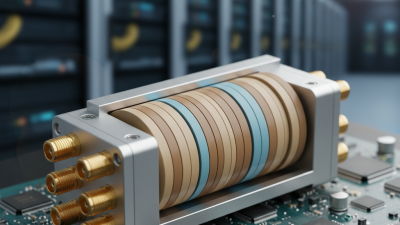
What are Dielectric Filters and How Do They Work?
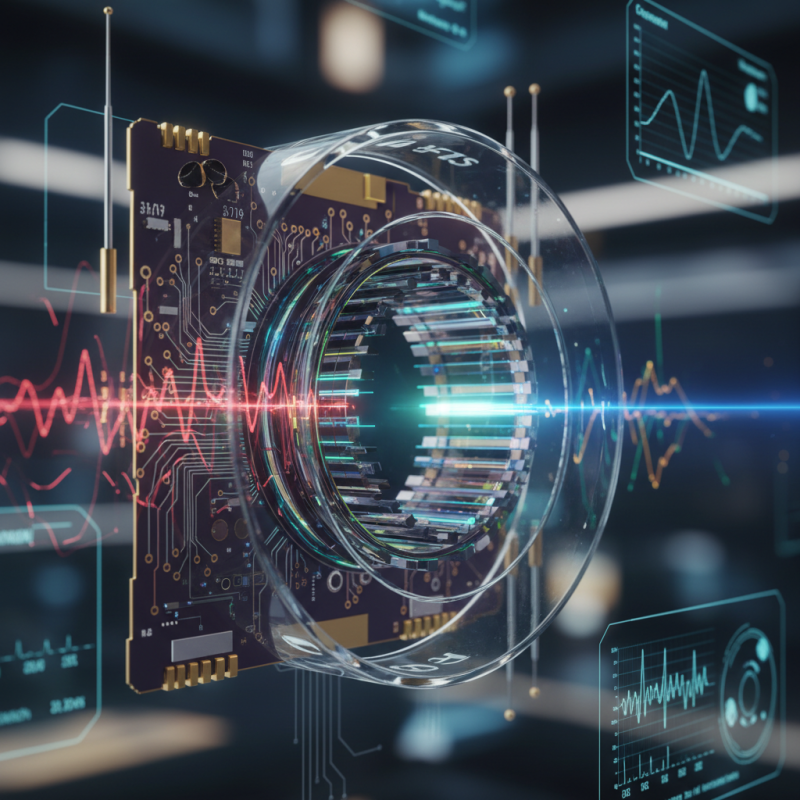
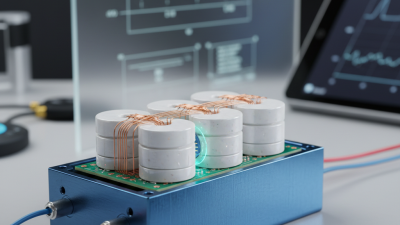
Dielectric Filters are essential components in various electronic applications. They serve to selectively transmit or block specific wavelengths of light. These filters are made from materials with high dielectric constants, allowing them to resonate at certain frequencies.
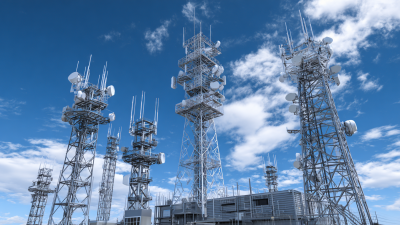
In the world of telecommunications, Dielectric Filters play a crucial role. They ensure clear signal transmission and reduce interference. Engineers design these filters to handle different spectral ranges. The precision in their design is vital for optimal performance.
However, Dielectric Filters are not flawless. There are challenges in manufacturing and integrating them into systems. Sometimes, they may exhibit unexpected resonances or attenuation. These issues require careful analysis and improvement. Understanding these filters better can lead to advancements in technology and communication systems.
What Are Dielectric Filters? An Overview of Their Definition and Types
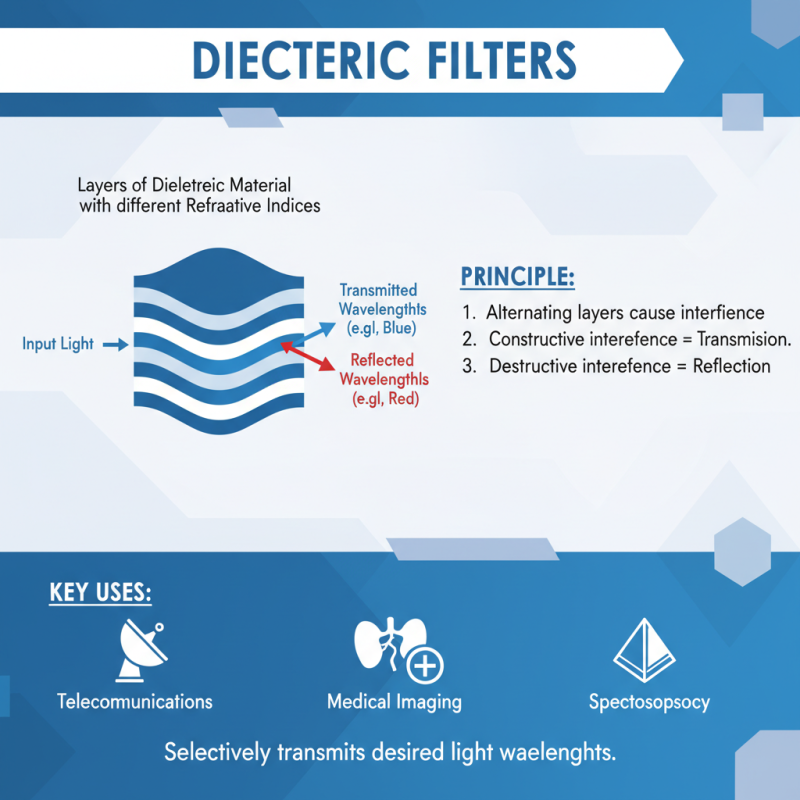
Dielectric filters are essential components in various electronic devices. They selectively transmit certain wavelengths of light while blocking others. This ability makes them invaluable in telecommunications, medical imaging, and spectroscopy. The basic principle involves layers of dielectric material with different refractive indices. These layers create constructive and destructive interference of specific wavelengths.
There are multiple types of dielectric filters, including bandpass, bandstop, and high-pass filters. Bandpass filters allow a specific range of frequencies. They are widely used in optical applications. Bandstop filters, on the other hand, block a certain range. High-pass filters allow frequencies above a certain threshold. This variety enhances their usability across fields.
However, dielectric filters have limitations. Their performance can degrade with environmental factors like temperature and humidity. This fragility might reduce reliability in certain conditions. Engineers must consider these challenges when designing systems that use these filters. The balance between complexity and effectiveness remains an ongoing debate in filter design.
How Dielectric Filters Function: Principles of Operation in Signal Processing
Dielectric filters are crucial in signal processing. They selectively allow certain frequencies while blocking others. The key lies in their construction. These filters utilize materials that have dielectric properties, which can resonate at specific frequencies. This design creates a strong response to the targeted signals, whether they are for communication or other applications.
The operation of dielectric filters involves interference. A wavelength interacts with the material and experiences constructive or destructive interference. This interaction enhances desired signals while suppressing unwanted ones. In practical applications, this means clearer signals and reduced noise. However, achieving the perfect balance can be tricky. Factors like temperature and humidity might affect performance.
These filters are not without limitations. For instance, their effectiveness can diminish outside certain ranges. While they excel at specific frequencies, their response can vary across bands. Understanding these nuances is essential for optimizing performance in real-world systems. Experimentation and fine-tuning are often necessary. This ongoing process makes dielectric filters both fascinating and demanding in the field of signal processing.
Dielectric Filters Performance in Signal Processing
This bar chart illustrates key performance parameters of dielectric filters used in signal processing. The data indicates the frequency in GHz, insertion loss, and return loss, showcasing the effectiveness of these filters in managing signal integrity.
Materials Used in Dielectric Filters: Analyzing Common Substrate Options
Dielectric filters are important components in optical systems. Their efficiency largely depends on the materials used. Various substrates offer different benefits and limitations. Common options include quartz, ceramics, and glass. Each material affects the transmission and reflection properties of the filter.
Quartz is a popular choice for its low optical loss. It provides a wide transmission range and excellent thermal stability. However, it can be expensive. Ceramics, on the other hand, are valued for their durability and cost-effectiveness. They often withstand harsh environments better than glass. Yet, they may have higher optical losses in certain applications.
Glass substrates are relatively easy to work with. They are often favored for their availability and lower cost. However, their thermal sensitivity can impact performance. When choosing a substrate, one must consider the specific application requirements. Balancing cost, durability, and optical performance is not always straightforward. Making the right choice requires careful analysis and sometimes, trial and error.
What are Dielectric Filters and How Do They Work? - Materials Used in Dielectric Filters: Analyzing Common Substrate Options
| Material Type |
Dielectric Constant |
Loss Tangent |
Frequency Range (GHz) |
Thermal Stability |
| Ceramic |
6-12 |
0.001-0.01 |
1-30 |
Excellent |
| Glass |
5-8 |
0.005-0.02 |
5-20 |
Good |
| PTFE (Teflon) |
2.1 |
0.001 |
1-10 |
Excellent |
| Alumina |
9-10 |
0.005-0.02 |
1-50 |
Good |
| Silicon |
11.7 |
0.01 |
0.1-10 |
Moderate |
Applications of Dielectric Filters: From Telecommunications to Medical Devices
Dielectric filters are essential in various fields, such as telecommunications and medical devices. They utilize dielectric materials to selectively allow specific frequencies of light or radio waves to pass through while blocking others. This precise function is crucial in environments where signal clarity matters most.
In telecommunications, dielectric filters enhance signal quality, ensuring clear communication. They filter out unwanted frequencies, reducing interference. Their compact size makes them ideal for integration into small devices. In medical devices, these filters maintain signal integrity in imaging equipment. They help ensure accurate data transmission in critical health monitoring systems.
While dielectric filters offer impressive performance, their design can be complex. Striking the right balance between size and efficiency can be challenging. Sometimes, a trade-off is necessary, which may affect performance in specific applications. This complexity requires continuous reflection and innovation within the industry.
Performance Metrics: Evaluating Dielectric Filter Efficiency and Specifications
Dielectric filters play a crucial role in various applications, particularly in telecommunications and optical systems. Evaluating their efficiency involves understanding specific performance metrics. Key metrics include insertion loss, bandwidth, and out-of-band rejection. Insertion loss, typically expressed in decibels (dB), indicates how much signal is lost when passing through the filter. Reports suggest that high-quality dielectric filters achieve insertion loss values as low as 0.5 dB.
Bandwidth measures the range of frequencies that can pass through the filter with minimal loss. For effective functionality, a wider bandwidth is generally preferred. However, wider bandwidth often compromises other characteristics, such as out-of-band rejection. This metric assesses the filter's ability to block unwanted frequencies. High-performance filters provide greater than 30 dB rejection in unwanted bands, which is critical for maintaining signal integrity.
Despite advancements, challenges remain. Some dielectric filters, while efficient, may be less effective in specific frequency ranges. This can lead engineers to rethink their design strategies. Moreover, the manufacturing process can sometimes introduce variations, impacting overall performance. Engineers must carefully balance these factors. Doing so is vital for creating reliable systems that perform under diverse conditions.