How to Choose the Right Waveguide Filters for Your Application?
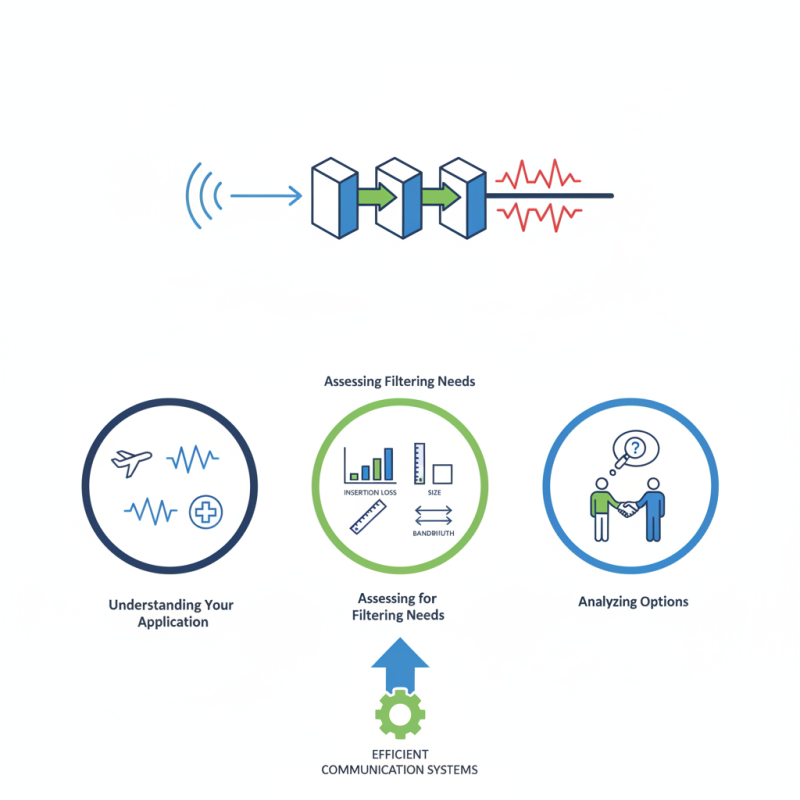
When selecting waveguide filters, several factors come into play. These components play a crucial role in telecommunications, ensuring signal integrity. Waveguide filters help eliminate unwanted frequencies. They are essential for designing efficient communication systems.
Understanding your application is vital. Different environments demand unique specifications. For example, aerospace applications require filters that can withstand harsh conditions. Medical devices often need filters with precise frequency control. Knowing the requirements helps narrow choices.
Not all waveguide filters are created equal. Some may offer better performance in certain scenarios. It’s important to assess filtering needs carefully. Consider factors like insertion loss, size, and bandwidth. The wrong choice may lead to subpar performance. Take time to analyze options and consult experts. Reflection on these aspects will yield better results.
Understanding the Basics of Waveguide Filters and Their Types
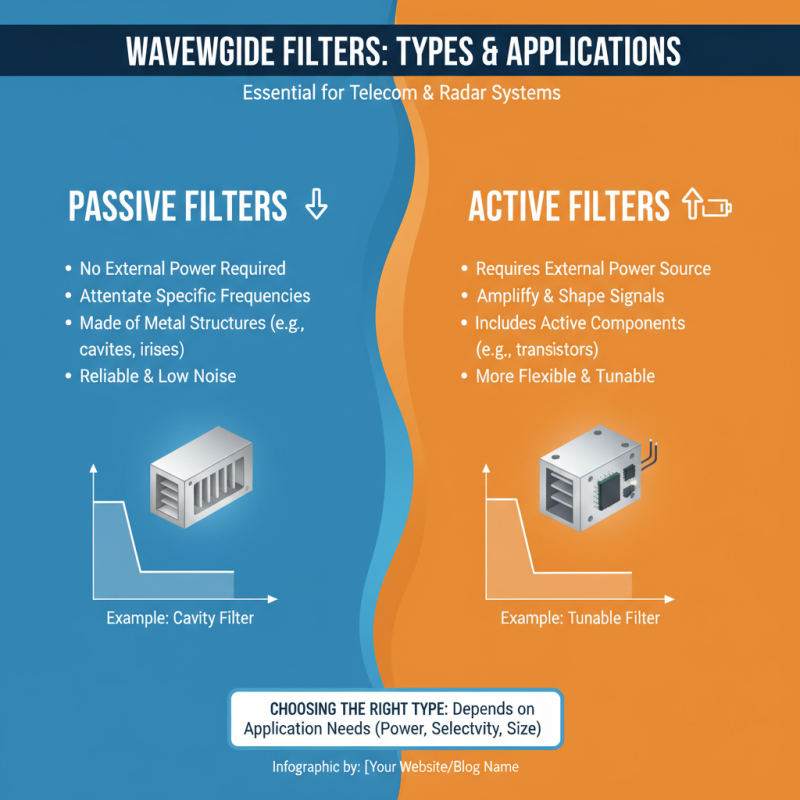
Waveguide filters play a crucial role in various applications, especially in telecommunications and radar systems. Understanding their types is essential for making the right choice. The two main categories are passive and active filters. Passive filters attenuate specific frequencies without external power. In contrast, active filters require power sources to enhance performance.
Selecting the appropriate type can be complex. For instance, consider your frequency range and insertion loss requirements. Passive filters often have broader bandwidths but can be limited in performance. Active filters can provide better rejection but may introduce noise. Assessing these trade-offs becomes vital.
Another important aspect is the filter’s size. Smaller waveguides may suit compact designs, but they could impact bandwidth. Larger waveguides allow for better performance but occupy more space. Balancing performance and dimensions often leads to reflection on your specific needs and limitations in the design phase. This reflection is key in honing in on the optimal waveguide filter for your application.
Comparing Performance Metrics: Insertion Loss, VSWR, and Q-Factor
Choosing the right waveguide filter involves understanding key performance metrics.
Insertion loss, VSWR, and Q-factor greatly influence filter efficiency.
Insertion loss measures the power lost when passing through the filter. A lower value is ideal, but achieving minimal loss can be challenging.
Some designs may not meet desired standards under all conditions.
VSWR represents the standing wave ratio in the system.
A low VSWR indicates efficient power transfer. However, it can fluctuate due to mismatched impedance.
Designers often need to balance these metrics, which may require compromise.
This process can lead to some filters performing well in one aspect but poorly in another.
The Q-factor, or quality factor, shows how well the filter selects frequencies.
A high Q-factor indicates sharper selectivity.
However, this can also limit bandwidth. Striking the right balance involves careful consideration of each metric.
It can be tricky to find an optimal solution that meets all application needs.
Ultimately, this requires testing and refining to achieve the best results.
Evaluating Frequency Range and Bandwidth Requirements for Your Application
When choosing waveguide filters, understanding frequency range and bandwidth is critical. Applications often demand specific performance parameters. For instance, communications systems may require filters operating within a narrow window, such as 5-10 GHz. According to industry data, filters with bandwidths below 1% can significantly improve signal integrity.
The frequency range determines how well a filter can perform under various conditions. In radar systems, expanding bandwidth can enhance target detection capability. A study by RF Globalnet indicated that filters with broader bandwidth are advantageous in environments with high frequency variability. This has implications for design choices and performance expectations.
Bandwidth is not just a number. It impacts loss and power handling. Filters with too narrow a bandwidth may introduce unwanted losses, crucially affecting system efficiency. In contrast, excess bandwidth can lead to increased noise levels. Engineers must balance these factors. Understanding the nuances of frequency and bandwidth can guide optimal filter selection for specific applications. In this complex landscape, careful evaluation is necessary.
Material Selection: Dielectric vs. Metallic Waveguide Filters
Material selection is crucial when choosing waveguide filters.
Dielectric waveguide filters are often preferred for their lightweight properties.
They offer low losses and are easier to manufacture. These filters work well at high frequencies.
However, their performance can degrade at extreme temperatures. Consider the application environment carefully.
On the other hand, metallic waveguide filters provide excellent reliability. They are robust and can withstand harsher conditions.
Typically, these filters have better heat dissipation and can handle larger power levels. Their weight can be a concern in mobile applications.
Moreover, metallic filters might be more expensive to produce and maintain.
Balancing these materials involves understanding specific use cases. If you're working in a stable environment, a
dielectric filter could suffice. However, for harsh conditions, metallic filters may be the better choice.
Think about the long-term implications of your decision. An oversight here could lead to reduced performance
or increased costs later on.
Cost Analysis and Budget Considerations in Waveguide Filter Selection
When selecting waveguide filters, cost analysis plays a pivotal role. It is essential to assess the initial purchase price. However, the total cost of ownership often extends beyond that. Installation, maintenance, and potential replacement costs must be factored in. A seemingly inexpensive filter might incur higher costs later. Evaluating longevity and reliability is crucial.
Budget considerations should align with your specific application needs. If the filter is for a critical system, investing more upfront can save headaches later. But if the application is less demanding, cost-effective options may suffice. It's vital to have a flexible budget. Unexpected expenses can arise during installation or testing phases. Also, companies should consider potential upgrades in the future. A slightly higher initial investment might offer long-term benefits.
Selecting the right waveguide filter is not just about cost. Balancing performance, longevity, and budget requires careful thought. Each application varies, needing distinct considerations. Reflect on what trade-offs are acceptable for your specific situation. Making an informed choice can greatly impact overall project success. The analysis should be thorough but also adaptable to changing needs or conditions.