2025 How to Choose the Right Base Station Filters for Optimal Performance
In the ever-evolving landscape of telecommunications, the importance of selecting the right Base Station Filters cannot be overstated. As the demand for mobile data continues to soar, ensuring optimal performance in base station operations is critical for service providers. Base Station Filters play a pivotal role in enhancing network efficiency by minimizing interference and allowing for clearer signal transmission. When evaluating options for Base Station Filters, several factors must be considered, including frequency range, insertion loss, and the overall design compatibility with existing systems.
A well-chosen Base Station Filter not only improves the quality and reliability of communication but also contributes to extended system longevity and reduced operational costs. With various technologies available, from traditional designs to advanced modern solutions, understanding the specifications and performance metrics is essential for making informed decisions. This guide aims to walk you through the critical aspects of Base Station Filters, providing insights into how to assess your unique requirements and select filters that align with your operational goals, ultimately driving optimal performance in your network infrastructure.

Understanding Base Station Filters and Their Importance in Communication
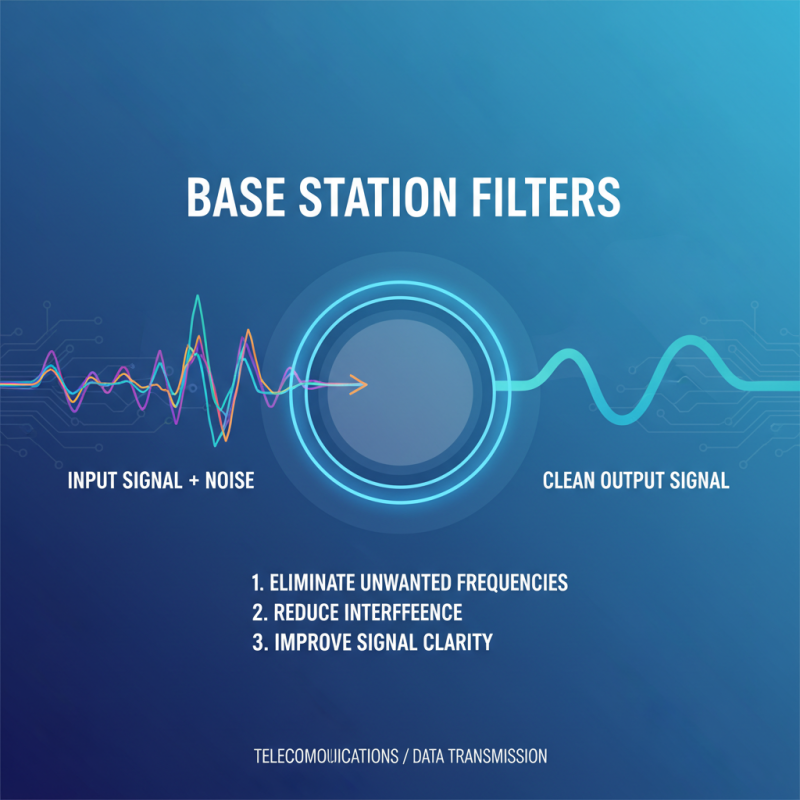
Base station filters play a crucial role in communication systems by ensuring that signals are transmitted and received clearly without interference. These filters help to eliminate unwanted frequencies, allowing for a more efficient and reliable communication process. Understanding their importance is vital for anyone involved in telecommunications or related fields. By filtering out noise and ensuring a cleaner signal, these components enhance the overall performance of communication networks, supporting everything from mobile phone calls to data transmission.
When choosing the right base station filters, consider the frequency range and the specific requirements of your communication system. Different filters serve various purposes, such as noise reduction or increasing signal strength, so it's essential to assess your needs accurately. Additionally, look into the filter's insertion loss, power handling capacity, and bandwidth to ensure optimal performance without compromising the quality of the transmitted signal.
**Tips:** Always verify the specifications of your filters against your project's requirements. It's also beneficial to work with professionals who understand the latest technologies and can recommend the best solutions for your specific needs. Regularly monitoring filter performance can help in identifying any potential issues before they affect communication efficiency, ensuring that your system remains reliable.
Key Factors to Consider When Selecting Base Station Filters
When selecting base station filters for optimal performance, several key factors must be considered to ensure the best results for communication systems. One critical aspect is the frequency response of the filter, as it determines how well the filter can isolate desired signals from unwanted noise and interference.
According to industry studies, the demand for filters that can operate effectively over a range of frequencies has increased by approximately 30% over the past three years, driven by the rapid expansion of wireless networks and the introduction of new communication technologies like 5G.
Another essential factor is the filter's insertion loss, which directly impacts the overall efficiency of a base station. Research indicates that filters with low insertion loss (typically below 2 dB) are crucial for maintaining signal integrity and preventing degradation in performance. Additionally, the quality of the materials used in the construction of the filters plays a significant role in their longevity and reliability. Data from recent market analyses suggest that high-quality filters can extend the lifespan of base station equipment by up to 40%, reducing the need for frequent replacements and maintenance.
Finally, the filter's temperature stability should not be overlooked. As environmental conditions can fluctuate significantly, a filter that maintains its performance across a wide temperature range is vital for ensuring consistent service availability. In fact, studies demonstrate that temperature variations can induce shifts in filter performance by as much as 15%, potentially compromising communication efficacy. Consequently, selecting the right base station filters requires a comprehensive evaluation of these factors to achieve optimal performance in today's dynamic telecommunications landscape.
Types of Base Station Filters and Their Specific Applications
When selecting base station filters, it's essential to understand the various types available and their specific applications. Common types of filters include band-pass filters, notch filters, and low-pass filters. Band-pass filters are designed to allow a specific range of frequencies to pass while attenuating frequencies outside this range. This makes them ideal for cellular networks, where they support multiple channels and minimize interference from adjacent frequencies. Notch filters, on the other hand, are utilized to eliminate unwanted frequencies or harmonics that could disrupt communication. They are particularly effective in environments where specific interference sources are consistently present.
Low-pass filters serve a distinct purpose by blocking high-frequency signals while allowing lower frequencies to pass. These are especially useful in reducing noise and harmonics in base station operations. By utilizing low-pass filters, operators can enhance the overall signal quality and maintain optimal performance. The choice of the right filter ultimately hinges on the operational environment and the specific communication requirements. Understanding these distinctions helps in making informed decisions that align with the performance goals of a base station setup.
Base Station Filters Performance Analysis - 2023
This chart illustrates the performance comparison of various types of base station filters based on their insertion loss measured in dB (decibels). The filters are categorized by their specific applications, showcasing their effectiveness for optimal performance in communication systems.
Performance Metrics to Evaluate Base Station Filters
When selecting base station filters, evaluating performance metrics is crucial to ensure optimal functionality and efficiency. Key performance metrics that should be considered include insertion loss, which measures how much signal is lost when passing through the filter. A lower insertion loss indicates better performance, allowing more of the signal to be transmitted effectively. Additionally, the filter's bandwidth is a significant metric, as it determines the range of frequencies the filter can handle without significant loss. Filters with wider bandwidths are generally more versatile, accommodating various applications.
Another important metric is the filter's selectivity, defined as its ability to differentiate between the desired signal and adjacent frequency interference. High selectivity ensures that the filter can effectively suppress unwanted signals while allowing the intended frequencies to pass through.
Moreover, observing the filter's power handling capability is essential, as it indicates how much power the filter can handle without distortion, ensuring longevity and reliability. By focusing on these performance metrics, operators can make informed decisions when selecting the right base station filters, ultimately leading to enhanced system performance and reduced operational issues.
Best Practices for Installation and Maintenance of Base Station Filters
When installing base station filters, it is crucial to ensure that the installation environment is optimal for performance. Begin by selecting a location that is free from potential obstructions and electromagnetic interference, as these can adversely affect signal quality. Proper grounding of the filters is also essential to minimize noise and enhance the overall reliability of the system. Additionally, it is advisable to use high-quality connectors and cabling to avoid signal loss, which can occur due to poor connections or degraded materials over time.
Maintenance of base station filters plays a vital role in sustaining their performance. Regular inspections are necessary to identify any signs of wear or damage, as well as to check for dust accumulation, which can impede filtration efficiency. It is recommended to schedule periodic cleaning of the filters and associated components with appropriate tools and materials. Logging maintenance activities can help track the performance over time, allowing for proactive adjustments before issues arise. Adopting these best practices ensures that the base station filters operate at peak performance, ultimately leading to improved communication quality and reliability.