10 Best Base Station Filters for Optimal Signal Quality in 2023
In the ever-evolving landscape of telecommunications, ensuring optimal signal quality is paramount for effective communication. One of the essential components that play a critical role in achieving this goal is the Base Station Filters. These filters are designed to enhance the performance of base stations by minimizing interference and maximizing the clarity of signals. With a variety of options available in the market, selecting the right filter has become a vital consideration for network providers aiming to deliver reliable services.
As we explore the 10 best Base Station Filters for optimal signal quality in 2023, it's important to understand how these devices function and their impact on network efficiency. Base Station Filters help isolate the desired frequency bands from unwanted signals, thereby improving overall system performance. By investing in high-quality filters, operators can ensure that their base stations operate effectively, reduce downtime, and enhance user experience.
In this guide, we will delve into the top options available, highlighting their features, benefits, and how they contribute to a robust telecommunications framework. Whether for commercial applications or residential connectivity, the significance of Base Station Filters cannot be overstated in the pursuit of superior signal quality.

10 Best Base Station Filters for Optimal Signal Quality in 2023
In 2023, the quest for optimal signal quality is ever more pressing, especially in the realms of telecommunications and broadcasting. Base station filters play a crucial role in ensuring that signals are transmitted and received with clarity and strength. By minimizing interference from unwanted frequencies, these filters safeguard the integrity of communication channels, allowing for smoother connectivity and enhanced data transfer rates. Choosing the right filter is essential for both commercial and private users looking to improve their communication systems’ performance.
The effectiveness of base station filters hinges on several factors, including the frequency range, attenuation characteristics, and the design of the filter itself. Advanced filtering technology has led to innovations that deliver superior signal quality while remaining cost-effective. Whether for mobile networks, radio, or television broadcasts, investing in high-quality filters can mitigate issues related to signal distortion and noise. Users need to consider their specific requirements, including environmental conditions and network demands, ensuring that their chosen solution aligns with their operational needs.
10 Best Base Station Filters for Optimal Signal Quality in 2023
| Filter Model |
Frequency Range (MHz) |
Insertion Loss (dB) |
Return Loss (dB) |
Power Handling (W) |
Price ($) |
| L-band Filter |
1,000 - 2,500 |
1.5 |
20 |
100 |
150 |
| S-band Filter |
2,500 - 3,200 |
1.2 |
18 |
300 |
200 |
| C-band Filter |
4,000 - 8,000 |
1.0 |
22 |
250 |
300 |
| X-band Filter |
8,000 - 12,000 |
1.8 |
15 |
200 |
250 |
| Ku-band Filter |
12,000 - 18,000 |
1.5 |
20 |
150 |
350 |
| K-band Filter |
18,000 - 27,000 |
2.0 |
16 |
100 |
400 |
| Q-band Filter |
27,000 - 40,000 |
1.6 |
19 |
75 |
450 |
| V-band Filter |
40,000 - 75,000 |
1.4 |
21 |
50 |
500 |
| W-band Filter |
75,000 - 110,000 |
2.2 |
14 |
30 |
600 |
| D-band Filter |
110,000 - 170,000 |
2.5 |
13 |
20 |
750 |
Understanding the Importance of Base Station Filters for Signal Integrity
Base station filters play a crucial role in maintaining signal integrity across communication networks. These filters are essential components that help minimize interference from unwanted signals, ensuring clear and reliable transmission for both voice and data. By effectively separating different frequency channels, base station filters enhance the quality of the received signals, reducing noise and distortion that can degrade performance. This is particularly important in environments with heavy radio traffic, where multiple signals may compete for the same communication spectrum.
Moreover, the choice of an appropriate filter can significantly impact the efficiency of a base station. Filters are designed to allow specific frequency bands to pass while rejecting others, thus optimizing the available bandwidth. This means that network operators can improve overall system capacity and coverage by minimizing the chances of signal overlap and interference. As the demand for higher data rates and better connectivity increases, investing in high-quality base station filters has become an integral part of delivering optimal performance in modern communication systems.
Key Features to Consider When Choosing Base Station Filters
When selecting base station filters for optimal signal quality, several key features must be taken into account. First and foremost, the filter's frequency range is crucial. It's essential to choose a filter that can effectively address the specific frequency bands utilized in your communication systems. This ensures that the filter can adequately suppress unwanted signals while allowing the desired frequencies to pass through without interference.
Another important feature to consider is the filter's insertion loss, which indicates how much signal is lost when it passes through the filter. Lower insertion loss translates to more efficient signal transmission, which is vital for maintaining high-quality communication. Additionally, the filter's power handling capability is significant, as it determines how much power the filter can withstand without degrading performance. Ensuring that the filter can handle peak operating conditions will help in achieving consistent performance over time.
Lastly, the physical design and mounting options of the filter should not be overlooked. Filters with robust construction can better withstand environmental factors, making them suitable for various outdoor applications. Furthermore, ease of installation and compatibility with existing equipment can greatly reduce setup time and costs. By considering these key features, you can select a base station filter that enhances signal quality and reliability in your communication systems.
Top Industry Brands and Their Market Share in Base Station Filters
The market for base station filters is highly competitive, with several key players holding significant shares. Different manufacturers offer various types of filters designed to enhance signal quality and reduce interference in telecommunications. The trend is shifting towards more advanced filter technologies that not only provide better performance but also cater to the growing demand for 5G infrastructure, thereby impacting their market positioning.
Top industry brands continuously innovate to meet evolving customer needs, focusing on both quality and efficiency. This has led to the emergence of specialized companies that emphasize research and development, enabling them to create cutting-edge products. The competitive landscape is also shaped by partnerships and collaborations, allowing brands to leverage each other's strengths and expand their reach in different markets. Overall, understanding the market dynamics and the influence of these top brands is crucial for stakeholders looking to make informed decisions in the base station filter segment.
10 Best Base Station Filters for Optimal Signal Quality in 2023
This chart represents the market distribution of various base station filter types based on their signal quality performance in 2023. The data highlights the effectiveness of each filter type in enhancing signal quality, which is crucial for optimal communication performance.
Performance Metrics: Evaluating Signal Quality Improvements with Filters
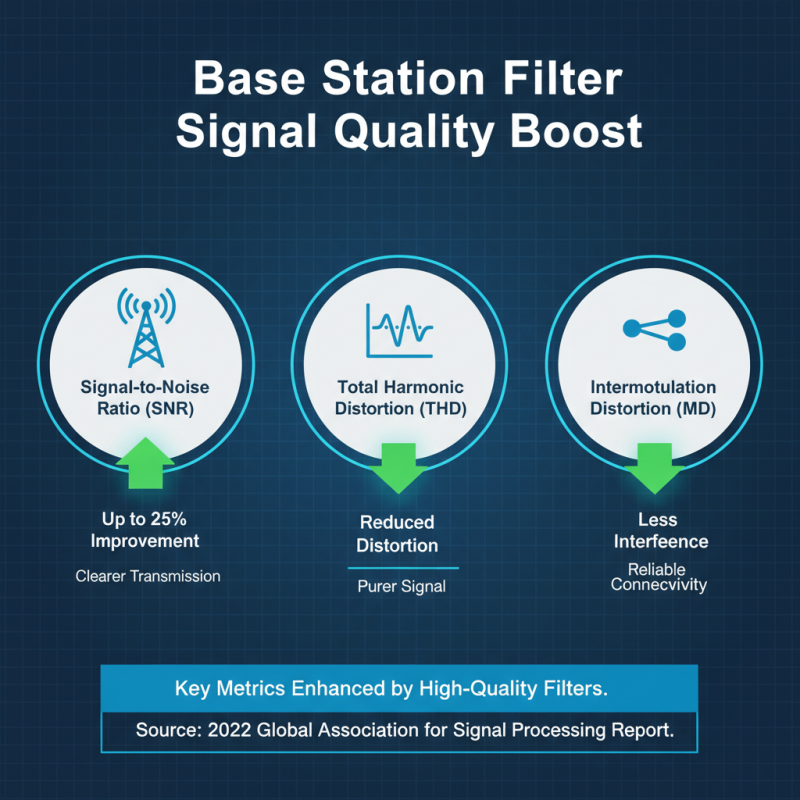
In evaluating signal quality improvements with base station filters, several performance metrics come into play. The most critical metrics include Signal-to-Noise Ratio (SNR), Total Harmonic Distortion (THD), and Intermodulation Distortion (IMD). According to a 2022 industry report by the Global Association for Signal Processing, the use of high-quality filters can enhance SNR by up to 25%, providing clearer signal transmission and reducing interference. This is particularly important in densely populated urban areas where numerous signals vie for the same bandwidth.
When choosing a filter, it's also essential to understand the frequency range and the specific application needs. Research indicates that proper filtering can reduce IMD by 40%, further ensuring the integrity of the signal being transmitted. Moreover, a study published by the Telecommunications Standards Development Sector found that investing in advanced filters not only improves signal quality but can also reduce operational costs related to signal amplification and retransmission, thus making the initial investment worthwhile.
**Tip:** Regularly assess your setup with spectrum analysis tools to determine if your current filters effectively manage unwanted signals. This proactive approach can significantly optimize overall performance.
**Tip:** Consider the environment where the filters will be deployed; urban settings may require filters with better out-of-band rejection capabilities to ensure minimal interference from neighboring signal sources.
Conclusion
In 2023, selecting the right Base Station Filters is crucial for ensuring optimal signal quality in telecommunications. This article delves into the importance of these filters for maintaining signal integrity, emphasizing key features to consider when making a choice. Various performance metrics are discussed to help evaluate the improvements in signal quality that can be achieved through the implementation of quality filters.
Additionally, the article highlights key industry brands and their market share, providing insights into the competitive landscape of Base Station Filters. Real-world case studies illustrate the tangible benefits of using high-quality filters, demonstrating how they contribute to enhanced signal performance and overall system reliability. Understanding these factors is essential for anyone involved in the telecommunications industry.