Leave Your Message

7 Best High Power Filters for Global Buyers?

Choosing among the 7 Best High Power Filters for Global Buyers requires more than comparing prices or catalog ratings. A suitable filter must control unwanted noise without weakening the required signal. It should also withstand real operating conditions, including high current, voltage stress, heat, vibration, and continuous duty cycles. Small details matter. A loose terminal, undersized housing, or poorly managed ground path can reduce performance quickly.

Henry W. Ott, a respected EMC engineering authority, often emphasized, “The best filter is no filter.” This practical idea encourages engineers to solve noise at its source before adding components. Yet many systems still need High Power Filters for reliable electromagnetic compatibility and stable operation. The challenge is choosing the correct design, not simply the largest one.

This guide compares seven filter options for international purchasers. It considers attenuation performance, frequency range, power capacity, cooling needs, installation space, certification support, and supplier documentation. Buyers should examine test reports, material specifications, warranty terms, and after-sales assistance. Regional standards may differ. Confirm them before purchase. A product that performs well in a laboratory may behave differently inside a crowded cabinet. That is where selection becomes less certain. Real installations can expose weaknesses that product brochures do not mention. Careful verification remains essential.
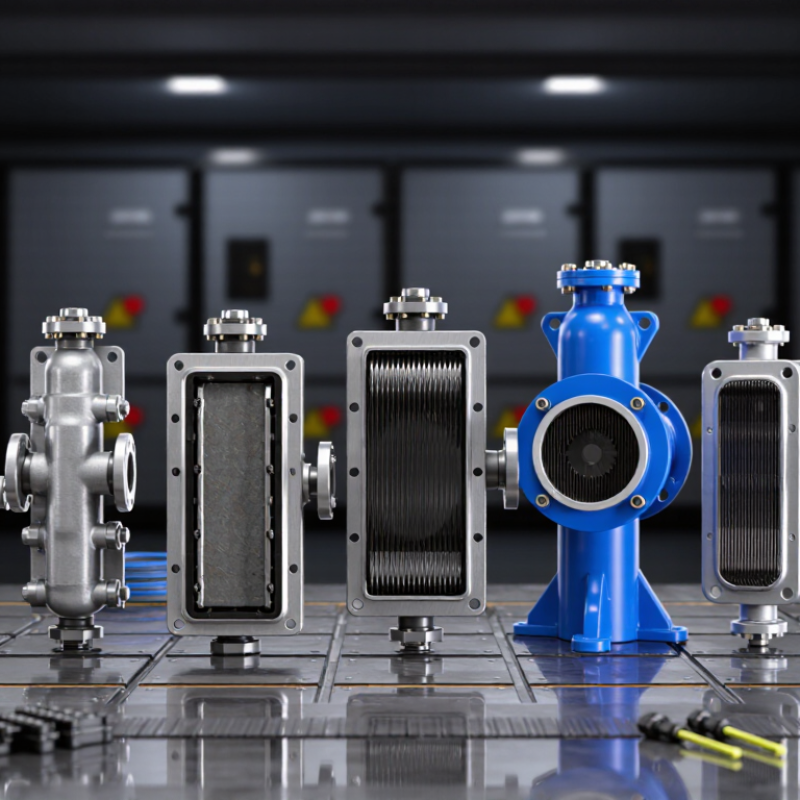
7 Best High Power Filters for Global Buyers?

What High-Power Filters Are and Where They Are Used

High-power filters control unwanted electrical, radio-frequency, or optical energy in demanding systems. They allow useful signals to pass while reducing noise, interference, or harmful frequency peaks. Unlike small signal filters, they must manage heat, voltage, current, and mechanical stress.

These filters are used in telecommunications cabinets, industrial power supplies, broadcasting equipment, medical imaging systems, renewable-energy converters, and high-power laser installations. An RF filter may protect a receiver from nearby transmitters. An EMI filter can reduce switching noise from an inverter. In a factory, a properly selected filter may also help sensitive sensors produce steadier readings.

Global buyers should check attenuation, insertion loss, impedance, operating voltage, current capacity, cooling requirements, and environmental protection. Installation details matter. A warm enclosure, poor cable routing, or missing grounding path can weaken real performance. Field testing with a spectrum analyzer or power-quality meter is often more useful than trusting a datasheet alone. That is an uncomfortable point.

A filter rated for high power is not automatically suitable for every system. Engineers should confirm frequency range, connector type, certification documents, and local grid conditions before ordering. Salt air, dust, vibration, and sudden load changes can shorten service life. I would also request test reports from the supplier. Paper specifications can look perfect, yet actual installation conditions may expose weaknesses.
Key Performance Standards for Comparing Global Filter Options

7 Best High Power Filters for Global Buyers?

Key Performance Standards for Comparing Global Filter Options

When comparing high power filters, start with electrical ratings, not catalog claims. Check continuous voltage, current capacity, frequency range, and short-term overload performance. A filter rated for 400 A may overheat in a cabinet with limited airflow. Measure the real load profile, including motor starts and daily peak demand.

Look for verified insertion-loss data across the required frequency band. A strong result at 150 kHz may offer little protection at 2 MHz. Ask for test conditions, equipment settings, and independent laboratory reports. Safety also matters. Review insulation voltage, leakage current, grounding design, and temperature-rise limits. Applicable IEC, UL, or regional requirements should match the installation market. Do not assume one certificate covers every country.

Mechanical details often decide field reliability. Check terminal spacing, enclosure protection, vibration resistance, and cable access. A filter that performs well on a bench may fail in a dusty factory. I have seen installation errors reduce performance more than expected. Keep cable routes short, separate noisy conductors, and follow the manufacturer’s torque values. Service life, replacement access, warranty terms, and technical support deserve equal attention.

A perfect filter is unlikely. Weight, cost, heat, and attenuation usually compete. Compare total operating risk, not only purchase price. Ask whether the supplier can provide samples, test records, and application guidance before a large international order.

7 Best High Power Filters for Global Buyers? - Key Performance Standards for Comparing Global Filter Options
Filter Option Primary Contaminant Target Typical High-Airflow Capacity Indicative Initial Pressure Drop Typical Filtration Performance Applicable Standards or Test Methods Recommended Operating Conditions Global Buying Considerations
High-Capacity Pleated Panel Filter Coarse dust, lint, pollen and larger airborne particles Approximately 1,000–4,000 m³/h per standard commercial module, depending on face area and velocity Approximately 50–150 Pa when clean Commonly ISO ePM10 or ISO Coarse; efficiency depends on the media and face velocity ISO 16890 for air-filter classification; ISO 29463 or EN 1822 is not normally used for this efficiency class Pre-filtration in HVAC systems, factories, warehouses and air-handling units Low replacement cost, widely available dimensions and simple installation; confirm frame size, sealing method and moisture resistance
High-Efficiency Bag Filter Fine dust, combustion particles and industrial airborne particulates Approximately 2,000–6,000 m³/h per filter bank, subject to pocket count and module size Approximately 80–250 Pa when clean Usually ISO ePM1 50–85%, with performance determined by media grade and airflow ISO 16890; fire classification may be evaluated under EN 13501-1 or an equivalent local method Commercial buildings, clean production areas, data rooms and industrial ventilation High dust-holding capacity and long service life; buyers should compare pocket depth, leakage control, support frame and disposal requirements
HEPA H13 Filter Fine aerosols, smoke particles, bacteria-carrying droplets and submicron particulate matter Approximately 1,000–2,500 m³/h for a large-format module; system airflow varies by design Approximately 150–300 Pa when clean At least 99.95% efficiency at the most penetrating particle size under EN 1822 classification EN 1822 and ISO 29463; individual-filter leak testing is normally required Healthcare, laboratories, pharmaceutical production and controlled industrial environments Specify gasket or gel-seal design, scan-test documentation, mounting orientation and the required terminal leakage limit
HEPA H14 Filter Very high-concentration fine particulate and biological aerosol control Approximately 700–2,000 m³/h per large-format module, depending on media area and pressure limit Approximately 180–350 Pa when clean At least 99.995% efficiency at the most penetrating particle size under EN 1822 classification EN 1822 and ISO 29463 with factory individual leak testing Critical cleanrooms, isolation areas, aseptic processing and high-containment applications Higher pressure demand and energy consumption than H13; verify total cost of ownership, replacement access and local certification acceptance
ULPA U15 Filter Ultrafine particles requiring extremely high removal performance Approximately 500–1,500 m³/h per module, depending on construction and allowable pressure drop Approximately 250–500 Pa when clean At least 99.9995% efficiency at the most penetrating particle size under EN 1822 classification EN 1822 and ISO 29463; in-situ integrity testing is recommended after installation Advanced semiconductor, microelectronics, nanotechnology and highly controlled research environments Use only when the risk assessment justifies the added energy and replacement cost; ensure fan capacity and seal integrity are adequate
Activated Carbon Adsorption Filter Odors and selected gaseous contaminants such as VOCs, depending on carbon chemistry Approximately 1,000–5,000 m³/h per housing, depending on bed depth and contact time Approximately 100–300 Pa when clean Gas-removal performance is contaminant-specific; it is not rated by particulate efficiency alone ISO 10121-1 and ISO 10121-2 for gas-phase air-cleaning media and devices; laboratory challenge testing is essential Odor control, chemical storage areas, laboratories, museums and industrial exhaust treatment Compare carbon type, impregnation, bed depth, residence time, humidity tolerance and breakthrough capacity; particulate pre-filtration is often required
Coalescing Compressed-Air Filter Oil aerosols, water aerosols, liquid droplets and solid particles in compressed-air systems Approximately 100–3,000 m³/h of compressed-air flow, depending on pressure and port size Approximately 70–250 mbar when clean High-grade designs can achieve approximately 0.01 mg/m³ residual oil aerosol under specified test conditions; particle class varies by element ISO 12500 series for compressed-air filter performance testing; ISO 8573-1 for compressed-air purity classes Plant air, instrumentation air, pneumatic equipment and downstream polishing before critical processes Check rated pressure, temperature range, drain type, flow correction factor, pressure-loss curve and compatibility with compressor oil
Performance figures are representative engineering ranges rather than guaranteed values. Actual capacity, efficiency, pressure drop and service life depend on media construction, filter dimensions, contaminant loading, humidity, airflow velocity and test conditions.

Seven High-Power Filter Types for Different Industrial Needs

7 Best High Power Filters for Global Buyers?

Seven High-Power Filter Types for Different Industrial Needs

High-power filtration begins with the process, not the product name. Bag filters suit large liquid flows with moderate particle loads. Cartridge filters provide finer removal when clean output matters. Basket strainers protect pumps from larger debris and are easy to inspect. Duplex filters keep production running while one chamber receives maintenance. Self-cleaning filters reduce manual intervention in continuous operations. Magnetic filters capture ferrous particles in coolant, oil, and process liquids. HEPA filters handle fine airborne particles in controlled industrial environments.

Each type has limits. A high flow rate can increase pressure loss. Fine filtration may raise replacement costs. Temperature, viscosity, chemical compatibility, and available space also affect performance. Buyers should request tested flow data, pressure ratings, filter media details, and maintenance intervals. Local safety requirements must be checked before installation. A perfect choice on paper can still fail in a dusty plant.

Tips: Compare operating pressure, not only maximum pressure. Ask how the filter performs near its rated capacity. Check whether replacement elements are locally available. Keep a spare seal kit nearby. Small details matter. Also, do not ignore cleaning water, drain access, or technician training. These practical issues are sometimes missed during purchasing reviews, and they can quietly reduce system reliability.

How to Match Filter Design with Flow, Pressure, and Contaminant Load

7 Best High Power Filters for Global Buyers?

Choosing a high-power filter starts with the process, not the catalog. Define the required flow in liters per minute or cubic meters per hour. Then check whether the flow is constant, pulsing, or seasonal. A filter sized only for average flow may fail during production peaks. Keep a practical safety margin, but avoid excessive oversizing. It can reduce filtration speed and increase equipment cost.

Pressure deserves equal attention. Record both operating pressure and the highest possible surge pressure. Housing materials, seals, and connections must match those conditions. For fine particles, select the filtration rating according to actual contaminant size. A screen for coarse debris cannot replace a depth filter for fine sediment.

If the fluid contains oil, fibers, or sticky solids, the pressure drop may rise faster than expected. Monitor inlet and outlet pressure.

Contaminant load determines service intervals. A dusty water line may need a larger dirt-holding capacity than a clean process loop. Ask for test data, not only marketing claims. Field samples are useful. However, one sample rarely represents a full operating season. I have seen designs fail because maintenance access was ignored. Leave space for element removal, drainage, and safe inspection. Filter selection is also a local compliance issue, so verify pressure ratings, materials, and disposal requirements before shipment.

International Purchasing Factors: Compliance, Supply, and Maintenance

7 Best High Power Filters for Global Buyers?

For global buyers, the best high power filter is not always the largest model. Performance depends on flow rate, pressure, particle size, and operating temperature. Compliance must be checked before purchase. Ask for test reports, material declarations, electrical documents, and pressure ratings. These records should match the destination market and the actual installation. A filter may perform well in a factory, yet fail during customs review or local inspection. That risk is often underestimated.

Tips: Confirm certification scope, not just certification names. Check whether spare cartridges, seals, and sensors are available locally. Request a written maintenance schedule. Also, test one unit before placing a large order.

Supply reliability matters as much as filtration efficiency. Compare production capacity, lead times, packaging quality, and export experience. Suppliers should explain how they control batch consistency. Replacement parts should have clear codes and stable dimensions. Maintenance teams need simple access to housings, drains, gauges, and connection points. A complicated design can increase downtime, especially where trained technicians are limited. It sounds obvious, but many purchasing plans ignore this detail.

Buyers should also calculate total ownership cost. Energy use, cleaning frequency, disposal needs, and emergency freight can change the final price. Avoid choosing from specifications alone. Real operating data is better. Still, no selection is perfect for every country or facility. Seasonal dust, unstable power, and unexpected workload changes can expose weaknesses. A careful review should leave room for adjustment.

7 Best High-Power Filter Grades for Global Buyers

Comparison of internationally recognized EN 1822 filter classes by minimum efficiency at the most penetrating particle size (MPPS).

Higher classes provide stronger particle capture but normally require tighter equipment tolerances, higher fan capacity, verified test documentation, and more disciplined maintenance. Global buyers should confirm the applicable standard, pressure-drop limits, delivery continuity, replacement availability, and local compliance requirements before purchasing.

Efficiency figures are the minimum EN 1822 classification values at MPPS: E10–E12, H13–H14, and U15–U16.